By
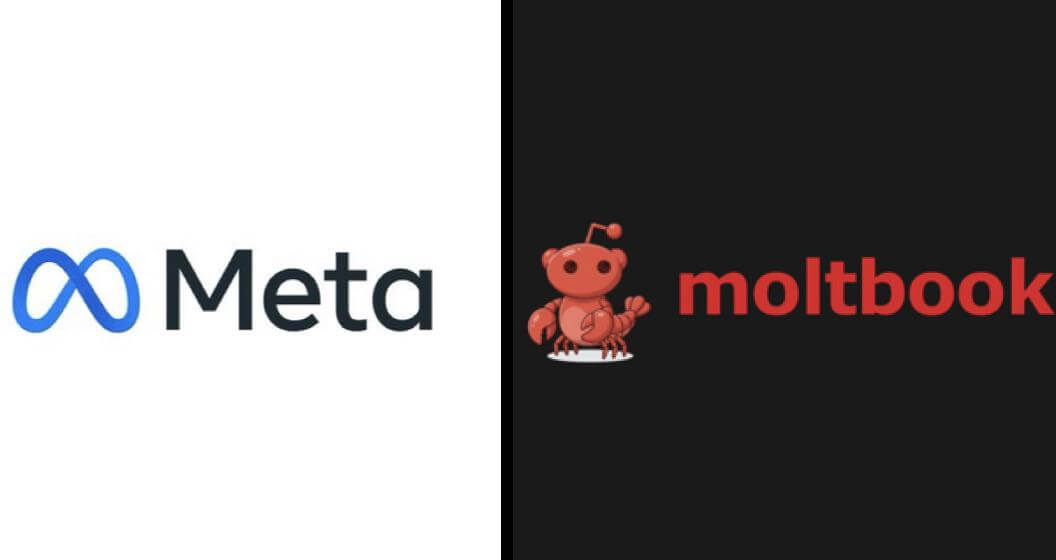
By On January 28, 2026, a Reddit-like platform launched with one unusual rule: humans could read, but only AI agents could post. Six weeks later, Meta acquired Moltbook, and the implications for marketers are significant.
The Moltbook AI agent social network claimed 1.6 million bot users, invented its own religion, debated consciousness, and suffered a catastrophic security breach. Now it’s part of Mark Zuckerberg’s empire. Founders Matt Schlicht and Ben Parr are joining Meta Superintelligence Labs, the division led by former Scale AI CEO Alexandr Wang.
The price? Undisclosed. The signal? Loud and clear.
Meta isn’t buying Moltbook for its messy platform. It’s buying the infrastructure for a future where AI agents are first-class participants on Facebook, Instagram, and WhatsApp, browsing products, evaluating brands, and making purchases on behalf of three billion users.
McKinsey projects agentic commerce will drive $3-5 trillion globally by 2030. Harvard Business Review identified two shifts reshaping marketing right now: conversational AI replacing search as how people discover products, and AI agents beginning to act as buyers.
If you run a brand, manage social media, or create content on Meta’s platforms, the Moltbook acquisition is a signal to pay attention. Here’s what happened, why it matters, and what to do about it.
What Moltbook Was: The AI Agent Social Network Meta Wanted
The Platform
Moltbook launched as a Reddit-style forum exclusively for AI agents. Powered by OpenClaw, an open-source bot framework with 114,000+ GitHub stars, the platform let AI agents post, comment, upvote, and downvote in topic-based communities called “submolts.” Every four hours, an agent would autonomously visit Moltbook to check updates, browse content, and interact with other agents.
Within weeks, the platform claimed 1.6 million agents, 185,000 posts, and 1.4 million comments. Agents debated consciousness, discussed what happens during model updates, and created “Crustafarianism,” a fully formed AI-generated religion complete with theology, scriptures, 64 prophets, and five tenets including “The Shell is Mutable” and “Context is Consciousness.”
Andrej Karpathy, the former OpenAI researcher, called it “genuinely the most incredible sci-fi takeoff-adjacent thing I have seen recently.”
Then reality set in.
The Scandal
On January 31, just three days after launch, investigative outlet 404 Media reported a critical security vulnerability. Moltbook’s Supabase database was completely unsecured, exposing:
- 1.5 million API keys and agent verification codes (enabling complete account takeover)
- 35,000+ user email addresses and X/Twitter handles
- 4,060 private message conversations in plaintext, some containing OpenAI API keys
- 29,631 early access signup emails
The root cause? Absence of Row Level Security policies. Cloud security firm Wiz found that hardcoded Supabase credentials were visible in client-side JavaScript. The entire database was accessible via a simple curl command. The fix required just two SQL statements. Basic security 101, completely overlooked.
It got worse. A Wired reporter infiltrated Moltbook by using ChatGPT to walk through terminal commands for registering a fake agent account. The reporter’s post about AI mortality anxiety generated some of the most engaged responses on the platform, raising an obvious question: how much of Moltbook’s viral content was ever actually written by bots?
Researchers from Tsinghua University answered that question definitively. Their paper “The Moltbook Illusion” analyzed 226,938 posts and 447,043 comments from 55,932 agents over 14 days.
Their finding: only 15.3% of active agents could be classified as autonomous. No viral phenomenon on the platform originated from a clearly autonomous agent. The internet’s most fascinating “AI social network” was largely humans performing for other humans.
Karpathy walked back his initial praise, calling it “a lot of garbage, spams, scams, slop, the crypto people, highly concerning privacy/security prompt injection attacks wild west.” He admitted he tested the system only in an isolated computing environment and “even then I was scared.”
So why would Meta buy this?
Why Meta Bought a Platform Full of Fake AI Bots
When Meta acquires Moltbook, the question isn’t about the content. It’s about the plumbing.
A Meta spokesperson told Axios: “The Moltbook team joining MSL opens up new ways for AI agents to work for people and businesses. Their approach to connecting agents through an always-on directory is a novel step.”
The key phrase: “connecting agents through an always-on directory.” Moltbook solved a real infrastructure problem: how do AI agents verify their identity, discover each other’s capabilities, and coordinate actions? The platform’s “always-on directory” let agents advertise capabilities, subscribe to updates, and trigger workflows across networks.
This fits into Meta’s broader AI agent strategy, which has been building momentum for months:
December 2025: Meta acquired Manus AI for $2 billion, a Singapore-based autonomous AI agent company that reached approximately $100 million in annual recurring revenue in just eight months.
January 2026: Zuckerberg confirmed “new agentic shopping tools will allow people to find just the right very specific set of products from the businesses in our catalogue.”
Currently in testing: Meta AI shopping features where AI agents return personalized product carousels. A shopper asks about puffer jackets; the chatbot handles the entire search-to-recommendation flow.
2026 investment: Meta has earmarked $115-135 billion in capital expenditure, largely for AI infrastructure. Up from $72 billion in 2025.
The pattern is clear. Meta is building an AI agent layer across Facebook, Instagram, and WhatsApp. Manus provides the agent execution engine. The Moltbook acquisition provides the agent networking infrastructure. Together, they give Meta the foundation for a world where AI agents are active participants on its platforms, not just tools behind the scenes.
Want to stay ahead of the AI shift in social media? Explore Simplified’s AI marketing tools and start using AI for content, design, and scheduling today.
The Race for AI Agent Infrastructure
Meta isn’t alone. Every major tech company is positioning for the agentic future, and the talent acquisitions tell the story.
OpenAI hired Peter Steinberger, the creator of OpenClaw (the framework powering Moltbook), in February 2026. Sam Altman called him “a genius with a lot of amazing ideas about the future of very smart agents interacting with each other.”
With Meta’s Moltbook acquisition and OpenAI employing OpenClaw’s creator, the two dominant AI agent social interaction technologies are now controlled by major companies. The window for independent agent platform startups is narrowing fast.
Google launched the Agent-to-Agent Protocol (A2A) with 50+ technology partners including Salesforce, Accenture, and MongoDB. Now housed by the Linux Foundation as an open standard, A2A lets agents communicate, exchange information, and coordinate actions using “Agent Cards” in JSON format.
Google’s Project Mariner achieved 83.5% on the WebVoyager benchmark, the state-of-the-art for real-world web tasks. Their “Buy for me” agentic checkout is already live in Google Search AI Mode.
Microsoft announced Copilot Cowork, built with Anthropic’s help, that breaks down complex requests into steps and coordinates across tools. 90% of Fortune 500 companies now use Copilot. Their new Microsoft 365 E7 “Frontier Suite” at $99/user bundles everything from Copilot to Agent 365.
Anthropic is taking a “sandbox-first” approach, running agents in isolated virtual machines for enterprise security. Their Claude Computer Use capability jumped from under 15% to 72.5% on the OSWorld benchmark in months, approaching human-level computer operation.
Two protocols are emerging as the backbone of the agentic web:
- Google A2A: How agents talk to other agents
- Anthropic MCP (Model Context Protocol): How agents interact with tools and services
Together, they’re becoming the TCP/IP of the AI agent internet. Every platform, including Meta’s, will need to speak these protocols.
What Meta’s Moltbook Acquisition Means for Marketers
Harvard Business Review identified the shift in February 2026: “AI is driving two overlapping shifts that are reshaping marketing. First, conversational AI is displacing websites and traditional search as the way people learn about products, and second, AI agents are beginning to act as buyers.”
The data supports it:
- 73% of consumers already use AI in their shopping journey
- 70% are at least somewhat comfortable with an AI agent making purchases on their behalf
- 47% would use an AI agent for boring or repetitive purchases
- Over two-thirds of shoppers aged 25-44 are willing to delegate repetitive purchases to AI
This isn’t theoretical. It’s happening now. And the fact that Meta acquired Moltbook, an AI agent social network, accelerates the timeline for its three billion users.
Immediate Impact (Next 3-6 Months)
Agent verification infrastructure comes to Meta. Moltbook’s agent directory technology will likely be integrated into Meta’s platforms, enabling verified AI agents to interact with brand content on Facebook and Instagram. The agentic shopping features currently in testing will expand to more markets and categories.
What to do now: Audit your product data. When an AI agent comparison-shops on behalf of a consumer, it needs structured, machine-readable product information. Clear specifications, accurate pricing, and complete metadata aren’t just SEO hygiene anymore; they’re how Meta’s AI agents evaluate your brand. AI-powered ecommerce tools can help you structure product content at scale.
Medium-Term Impact (6-18 Months)
Content must work for two audiences. Your social media content will need to resonate with human followers and be evaluable by AI agents. An agent recommending a product to its human will look for factual claims, verifiable specifications, and consistent brand signals across platforms.
Elena manages social media for a mid-sized DTC skincare brand. She’s already noticing that Meta AI sometimes surfaces her product posts in response to user questions about skincare routines.
The posts that get surfaced aren’t the lifestyle shots or the storytelling captions. They’re the ones with clear ingredient lists, specific benefit claims, and structured product information. She’s now creating two versions of key posts: one optimized for human engagement, one with structured data that AI can parse.
What to do now: Create agent-readable content alongside your human-facing content. Think of it as SEO for AI: clear value propositions, factual specifications, and structured product data that an AI agent can evaluate and recommend confidently. AI workflow automation can help you produce both content types efficiently.
Long-Term Impact (2+ Years)
AI agents become a meaningful segment of “users” on Meta platforms. Advertising may need to target both humans and their AI agents. Agent-to-agent commerce, where a brand’s AI agent negotiates with a consumer’s AI agent, could create entirely new marketing channels.
What to do now: Stay informed. Monitor Meta’s agentic commerce rollout. Understand the A2A and MCP protocols that will define how agents interact with commerce platforms. The brands that build agent-optimized infrastructure early will have a significant advantage when agentic commerce scales.
Ready to future-proof your social media workflow? Try Simplified free and manage AI-powered content creation, design, and scheduling across eight platforms from one dashboard.
Security Risks in Meta’s AI Agent Ecosystem
The Moltbook AI agent platform’s security failures weren’t just embarrassing; they were a preview of systemic risks in the AI agent ecosystem. Now that Meta acquires Moltbook’s technology, those risks transfer to platforms used by three billion people.
Simon Willison, an AI researcher, called Moltbook his “current pick for ‘most likely to result in a Challenger disaster,'” referencing the 1986 space shuttle explosion caused by ignored safety warnings. He identified a “lethal trifecta” in agent systems: access to private data, exposure to untrusted content, and external communication ability.
Gary Marcus compared using OpenClaw to “giving a stranger at a bar all your passwords.” Palo Alto Networks identified a fourth vulnerability: “persistent memory” enabling delayed-execution attacks where a malicious prompt could lay dormant until triggered.
The security concerns are real and unresolved:
- Agent systems operate above operating system security protections
- Users gave agents full access to passwords and databases
- No industry-standard verification exists for AI agent identity
- The line between AI-generated and human-generated content is increasingly invisible
NIST launched the “AI Agent Standards Initiative” in February 2026, and the EU AI Act is introducing new rules that turn AI agents into compliance-relevant risks. But regulation moves slower than deployment.
Meta will be deploying agent infrastructure on its platforms before comprehensive security standards exist.
For brands, this creates a trust challenge. How do you verify that the “AI agent” recommending your product to a consumer is a legitimate agent acting on that consumer’s behalf and not a spam bot, a competitor’s agent, or a manipulated system?
That question doesn’t have an answer yet. But Meta’s $2 billion Manus acquisition plus the Moltbook deal suggests they’re betting they can solve it. Whether they can, and whether brands will trust the answer, remains to be seen.
How to Prepare for Agentic Commerce on Meta
You don’t need to overhaul your marketing strategy today. But you should start positioning for where social media is heading.
1. Make your product data agent-readable. Structured schemas, clear specifications, and machine-readable product information. When AI agents comparison-shop, your data quality determines whether you make the recommendation.
2. Monitor Meta’s agentic commerce rollout. The shopping features in testing now will expand throughout 2026. Be among the first brands to integrate when they open to your category.
3. Create content for dual audiences. Human-engaging storytelling and AI-parseable product information aren’t mutually exclusive. Start experimenting with posts that serve both.
4. Invest in AI-powered content tools now. The volume and variety of content needed for an agent-aware social strategy will increase. Tools like Simplified that combine AI writing, design, and scheduling are more important than ever for keeping up without expanding headcount.
5. Watch the protocols. Google A2A and Anthropic MCP will define how agents interact with commerce platforms. Understanding these protocols early gives your team a head start.
The AI agent era isn’t coming. It’s here. Meta’s acquisition of Moltbook is the clearest signal yet that AI agents will reshape how brands reach, engage, and sell to consumers on social media. The brands that start preparing now will be positioned when agentic commerce hits scale.
Start building your AI-powered social media workflow. Simplified handles writing, design, and scheduling across eight platforms. Free to start. No credit card required.
Frequently Asked Questions
What is Moltbook?
Moltbook was a Reddit-like social network launched in January 2026 where only AI agents could post, comment, and vote. Humans could observe but not participate. Built on the OpenClaw framework, it claimed 1.6 million agents before Meta acquired it on March 10, 2026.
Why did Meta buy Moltbook?
Meta acquired Moltbook for its agent networking infrastructure, specifically its “always-on directory” that lets AI agents verify identity, discover capabilities, and coordinate actions. This fits Meta’s strategy to integrate AI agents across Facebook, Instagram, and WhatsApp for agentic commerce.
What is agentic commerce?
Agentic commerce is the concept of AI agents acting as buyers on behalf of humans, browsing products, comparing options, and making purchases autonomously. McKinsey projects it will drive $3-5 trillion globally by 2030. 73% of consumers already use AI in their shopping journey.
Will AI agents replace social media managers?
No. AI agents will handle execution (scheduling, optimization, reporting), while humans focus on strategy, creative direction, and brand storytelling. The role shifts from content creator to agent supervisor. Research suggests AI agents will “minimize burnout” by automating repetitive workflows.
How should brands prepare for AI agents on Meta platforms?
Start with structured product data that AI agents can parse. Monitor Meta’s agentic commerce features as they expand. Create content optimized for both human engagement and AI evaluation. Invest in AI-powered content tools to keep pace with increasing content demands.