By
By Most marketers aren’t short on ideas. They’re short on time—and patience.
A typical day looks something like this: you write captions in one tab, design creatives in another, edit a video somewhere else, and finally schedule the post using a completely different tool. By the time everything is done, you’ve spent more energy managing tools than actually creating content.
And here’s the uncomfortable truth: this isn’t unusual.
Most social media teams today use 4 to 6 different tools just to publish a single piece of content.
At the same time, AI has quietly become part of everyday workflows:
- 96% of social media managers now use AI daily
- The average time saved is around 2.5 hours per day
So the conversation has changed.
It’s no longer about whether AI tools are useful. That debate is over. The real question is: are you using the right tools—or just more tools?
Because more tools don’t always mean better output. In many cases, they just mean more switching, more friction, and more chances for things to go wrong.
This guide takes a practical approach. Instead of throwing a long list of tools at you, we’ve reviewed 13 AI social media platforms across 5 categories, focusing on what actually matters:
- What each tool does well (and where it doesn’t)
- Who it’s really built for
- How much time it can save you each week
- Whether it replaces other tools—or adds to your stack
To make this easier to navigate, we grouped the tools into five categories based on where they perform best:
| Category | Tools | Best For |
|---|---|---|
| All-in-One | Simplified, PostEverywhere, Hootsuite | Reducing tool overload |
| Scheduling | Buffer, Sprout Social, SocialBee | Reliable publishing |
| AI Writing | Jasper, FeedHive, Copy.ai | Faster content creation |
| Design | Canva, Adobe Express | Visual content production |
| Video | Opus Clip, Pictory | Video repurposing and creation |
If you’re trying to figure out whether to simplify your workflow, upgrade your setup, or just stop wasting hours on repetitive tasks, you’re in the right place.
Why AI Social Media Tools Matter in 2026

Source: Freepik
AI in social media isn’t new anymore—but its role has changed dramatically over the past few years.
What started as “help me write captions faster” has turned into something much bigger:
AI now helps plan content, predict performance, repurpose formats, and even decide when your audience is most likely to engage.
Let’s look at what the data actually shows:
- 96% of social media managers use AI tools daily
- 85% of businesses use AI for social media, up from just 42% in 2023
- Content creation time has dropped by as much as 80%
- AI-assisted posts see 32% higher engagement on average
- Businesses report an average 300% return on investment
Those numbers sound impressive—but they only tell part of the story.
The real shift: speed + consistency
Before AI tools became common, content creation was inconsistent by default.
Some weeks you’d post regularly. Other weeks things would fall apart—because writing, designing, editing, and scheduling everything manually takes time. A lot of it.
AI changes that in two ways:
- It reduces execution time
Tasks that used to take hours—like writing captions or resizing creatives—now take minutes. - It removes bottlenecks
You no longer have to wait for a designer, writer, or editor for every small task.
The result isn’t just faster content.
It’s more consistent output—which is what actually drives growth on social platforms.
The competitive gap is widening
Here’s where things get interesting.
Teams that use AI tools effectively aren’t just working faster—they’re compounding results.
Meanwhile, teams that don’t use AI are:
- Spending 3–4x more time on the same tasks
- Posting less frequently
- Struggling to keep up with content demands
It’s not that their content is worse.
It’s just harder for them to maintain consistency at scale.
And in social media, consistency usually wins.
The hidden problem: subscription sprawl
Now let’s talk about the part no one enjoys discussing.
Most marketers didn’t “choose” a tool stack.
They built it over time.
It usually looks like this:
- A design tool like Canva
- A scheduler like Buffer
- A writing tool like Jasper
- A video tool for editing
- Maybe an analytics platform on top
Individually, each tool makes sense. Together, they create a system that’s… messy.
Cost:
Typically between $120 and $200 per month
Time lost:
Around 30–45 minutes every day just switching between tools
But the biggest cost isn’t money or time—it’s focus.
Every time you switch tools, your brain has to reset.
And that constant reset adds friction to your workflow.
There’s even research suggesting it takes over 20 minutes to fully refocus after switching tasks.
So if you’re jumping between tools multiple times a day, you’re not just losing minutes—you’re losing momentum.
So what actually matters?
By 2026, the question isn’t:
👉 “Which AI tool should I use?”
It’s:
👉 “How many tools do I actually need?”
Because for many teams, the biggest improvement doesn’t come from adding another tool.
It comes from removing three.
In the next section, we’ll break down all 13 tools—starting with the all-in-one platforms that aim to replace your entire stack (and your 17 open tabs).
Here Are Our Top 13 AI Social Media Tools:
Let’s get into what actually matters—what these tools do, who they’re for, and whether they’re worth your time (and money).
We’ll start with the category most people care about right now.
CATEGORY 1: All-in-One Platforms
For people who are tired of juggling tools like they’re in a productivity Olympics
These tools aim to replace your stack entirely—or at least shrink it significantly.
1. Simplified ⭐ Editor’s Pick — Best All-in-One
Available on: Web, iOS, Android
What it is:
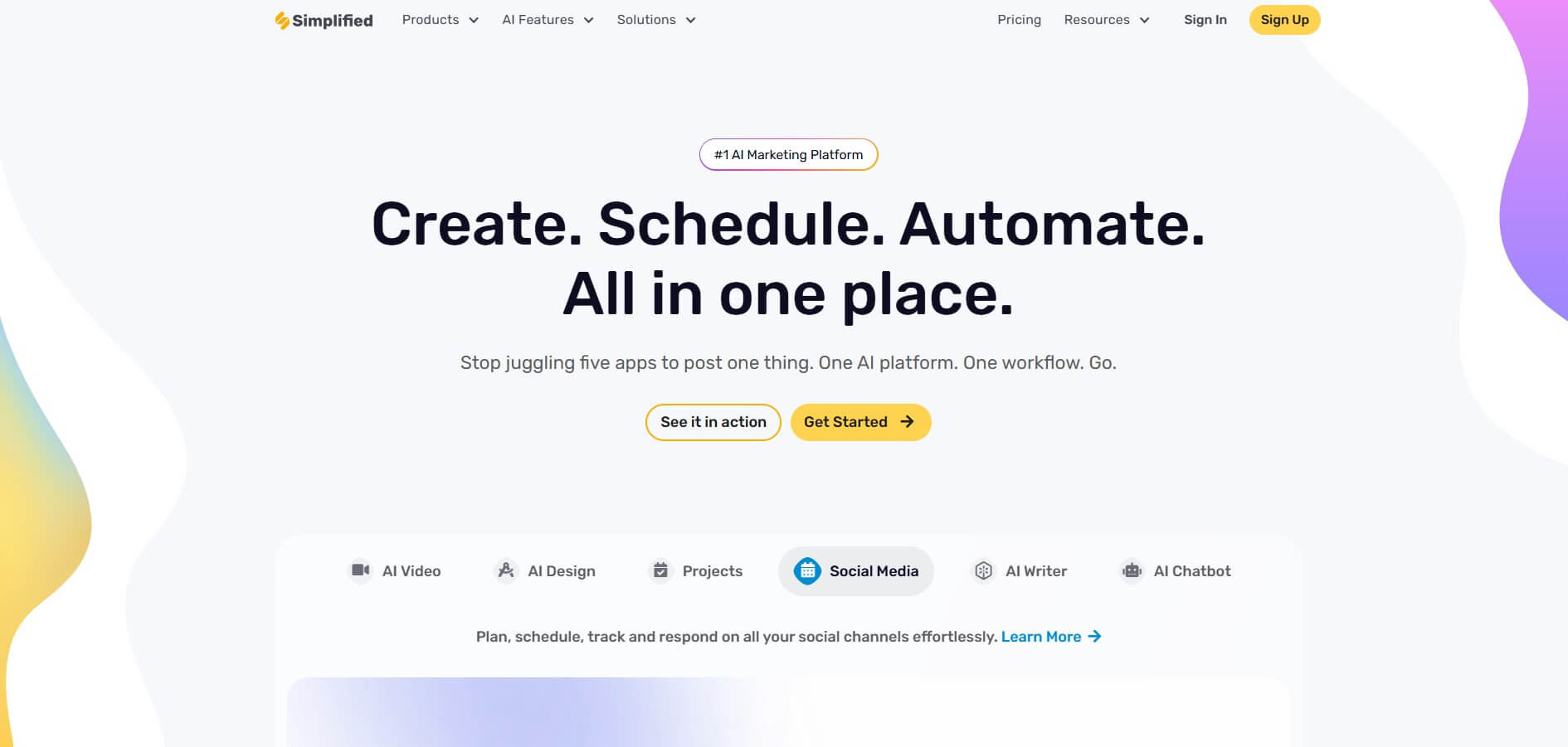
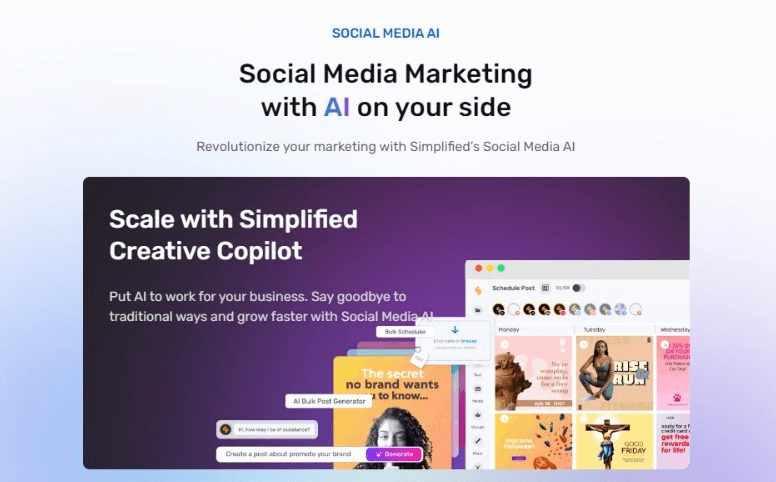
A single platform that combines AI writing, graphic design, video generation and editing, and social media scheduling.
Best for:
Content teams, agencies, and solo creators who want everything in one place instead of five different logins.
Key features
- AI writing tools for captions, posts, threads, and ads
- Built-in design tools including AI image generation, AI thumbnail maker, and many more, with social media templates
- Video generation and editing plus repurposing features
- Multi-platform scheduler with calendar view
- AI workflow automation to connect ideation, content creation, scheduling, and basic performance tracking in one continuous flow
- Team collaboration and approval workflows
- Stock image and video library
What works well
- Covers writing, design, video, and scheduling in one tool
- Reduces the need for multiple subscriptions
- Free plan is usable (not just a teaser)
- Works well for teams collaborating on content
Where it falls short
- Individual features aren’t as deep as specialized tools
- Analytics are basic compared to enterprise platforms
- Can feel overwhelming at first due to feature range
Honest take
Simplified doesn’t try to be the absolute best at one thing. It focuses on being good enough at everything most teams actually need. And for many users, that’s exactly the point.
Time saved
7–10 hours per week
Who should skip it
- Enterprises needing advanced analytics or social listening
- Teams with highly specialized workflows
Bottom line
If your current setup feels like “too many tools, too much switching,”
this is the most straightforward way to clean it up. With Simplified, all your social media management needs are met in one place.
Check Simplified’s official pricing page for the latest plan details and offers.
2. PostEverywhere
Available on: Web
What it is:
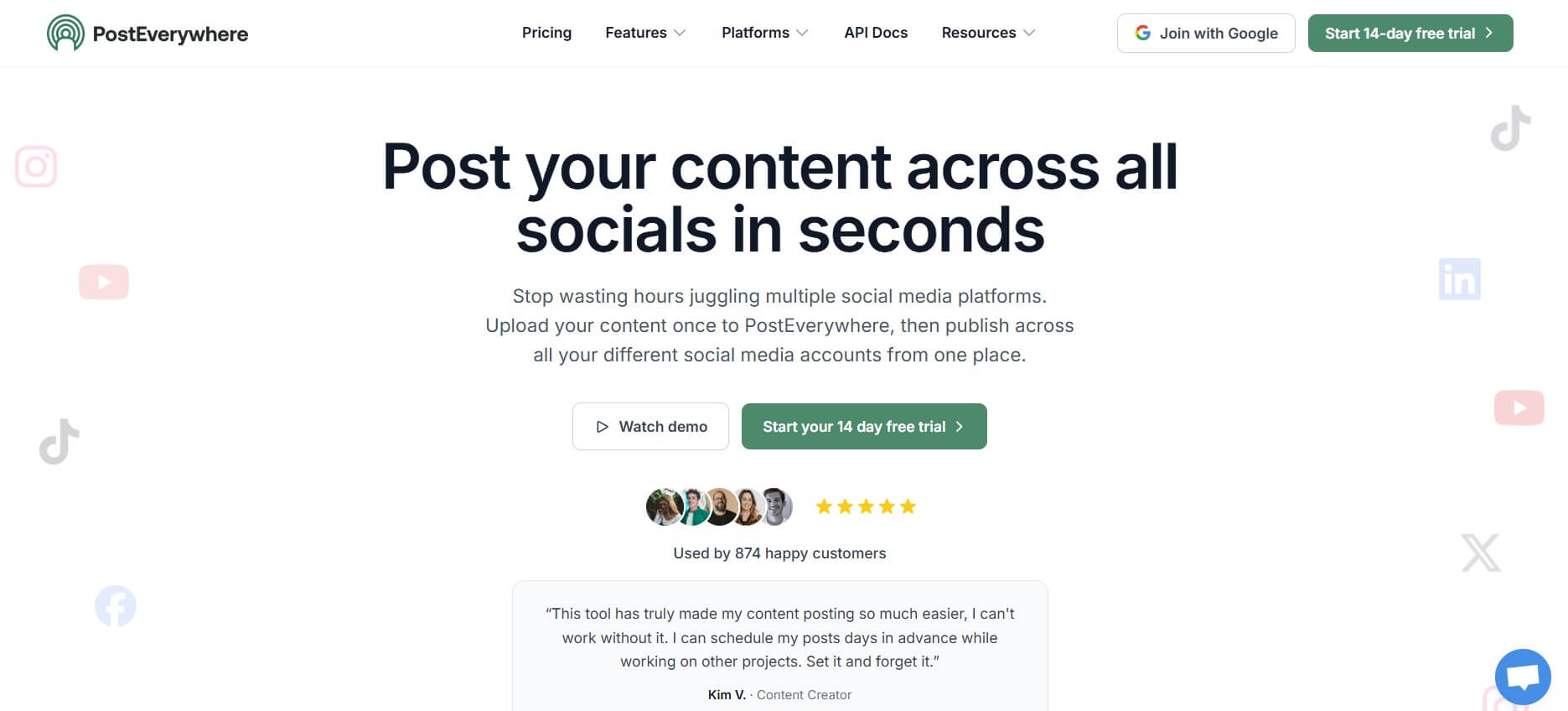
An all-in-one AI platform for content generation, cross-posting, and social media scheduling.
Best for:
Content creators and small businesses managing multiple platforms without a complex setup.
Key features
- AI content generation for posts and captions
- AI image creation capabilities
- Cross-platform posting automation
- Content calendar management
- Unified multi-platform dashboard
What works well
- Beginner-friendly interface with minimal setup
- Covers essential content + scheduling needs in one place
- Free plan is accessible for early-stage creators
- Quick multi-platform publishing saves time
Where it falls short
- Less established compared to larger platforms
- Limited analytics and reporting features
- Free plan has usage restrictions
Honest take
PostEverywhere feels like the “lightweight” version of an all-in-one platform.
It doesn’t try to compete on depth—it focuses on making content creation and posting simple.
Time saved
5–7 hours per week
Who should skip it
- Teams needing advanced analytics or social listening
- Agencies managing multiple clients at scale
Bottom line
A practical choice if you want an all-in-one tool without the complexity—or the higher price tag.
Check PostEverywhere’s official pricing page for the latest plan details and offers.
3. Hootsuite
Available on: Web, iOS, Android
What it is:
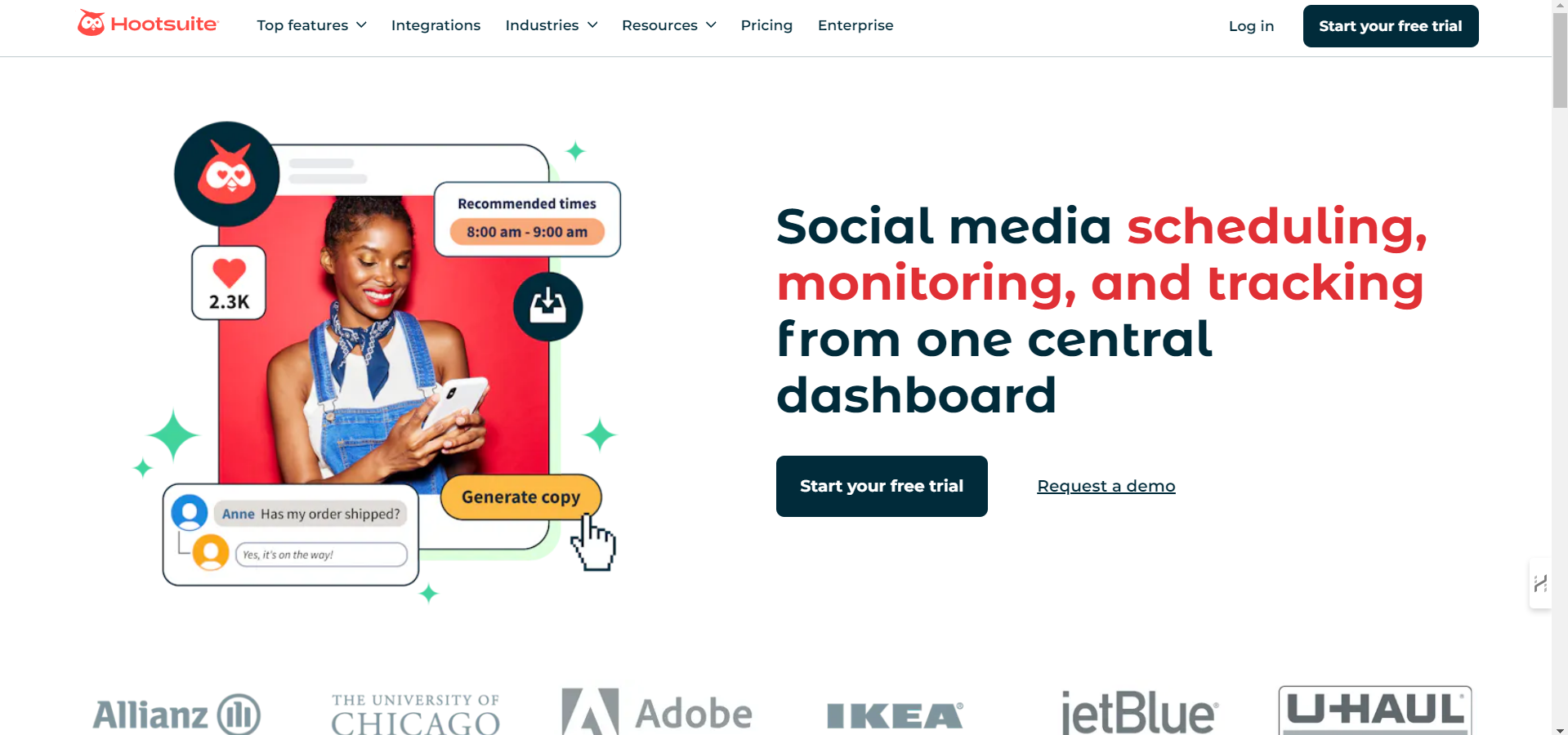
A comprehensive social media management platform covering scheduling, analytics, social listening, and team workflows.
Best for:
Agencies and large marketing teams managing multiple brands or clients.
Key features
- AI best-time-to-post predictions
- AI-assisted content suggestions
- Social listening and competitive monitoring
- Multi-account unified dashboard
- Team workflows, approvals, and role management
- Advanced analytics and reporting
What works well
- Handles multiple accounts and clients efficiently
- Strong analytics and reporting capabilities
- Built-in social listening and competitor tracking
- Reliable for large-scale operations
Where it falls short
- Expensive for small teams and solo creators
- Steeper learning curve compared to simpler tools
- Can feel bloated if you only need basic scheduling
Honest take
Hootsuite is built for teams that need structure, reporting, and control. If your workflow involves multiple stakeholders and accounts, it earns its place.
Time saved
6–8 hours per week (for multi-account managers)
Who should skip it
- Solo creators and small businesses
- Users looking for a simple, lightweight tool
Bottom line
One of the most complete platforms on this list—just make sure you actually need everything it offers.
Check Hootsuite’s official pricing page for the latest plan details and offers.
CATEGORY 2: Scheduling & Management
For people who want their content to go out on time without turning scheduling into a full-time job
These tools focus on reliable publishing, timing, and consistency—without the complexity of full all-in-one platforms.
4. Buffer
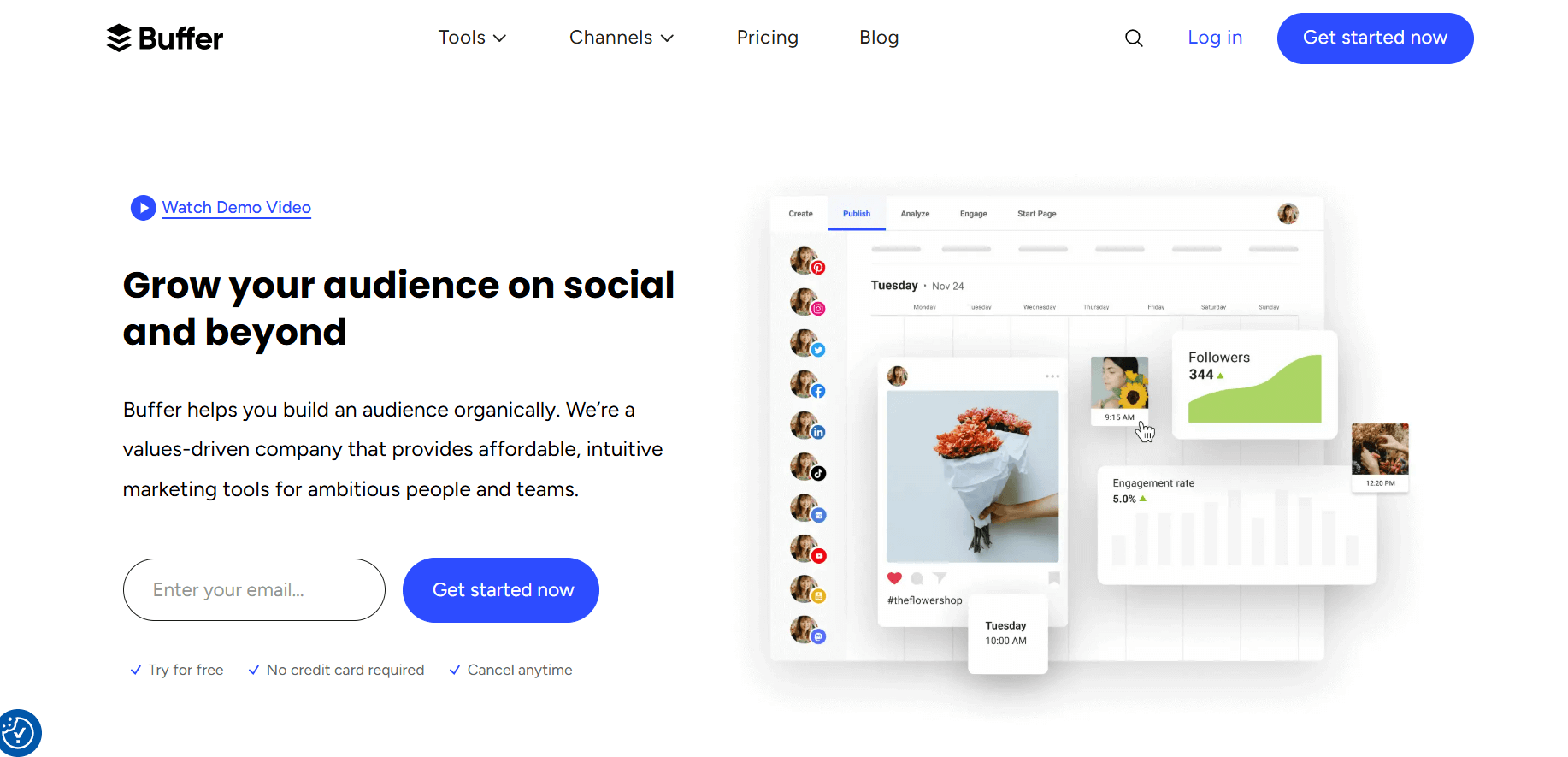
Available on: Web, iOS, Android, Chrome Extension
What it is:
A simple and reliable social media scheduling tool with basic AI assistance and performance tracking.
Best for:
Solo creators, freelancers, and small businesses who want easy, no-fuss scheduling.
Key features
- Queue-based scheduling with customizable time slots
- Multi-platform publishing (Instagram, LinkedIn, X, Facebook, TikTok, Pinterest, etc.)
- AI-assisted caption suggestions
- Optimal posting time recommendations
- Basic analytics and performance tracking
- Browser extension for quick sharing
What works well
- Extremely easy to use, even for beginners
- Reliable scheduling system that rarely breaks
- Clean interface with minimal distractions
- Affordable with a usable free plan
Where it falls short
- No advanced automation or workflows
- Limited analytics compared to larger tools
- No social listening features
Honest take
Buffer is intentionally simple. It doesn’t try to be “smart”—it tries to be dependable. And that’s exactly why people stick with it.
Time saved
3–5 hours per week
Who should skip it
- Teams needing approvals, workflows, or automation
- Businesses that rely heavily on analytics or reporting
Bottom line
If you just want scheduling to work without thinking about it, Buffer is one of the easiest tools to trust.
Check Buffer’s official pricing page for the latest plan details and offers.
5. Sprout Social
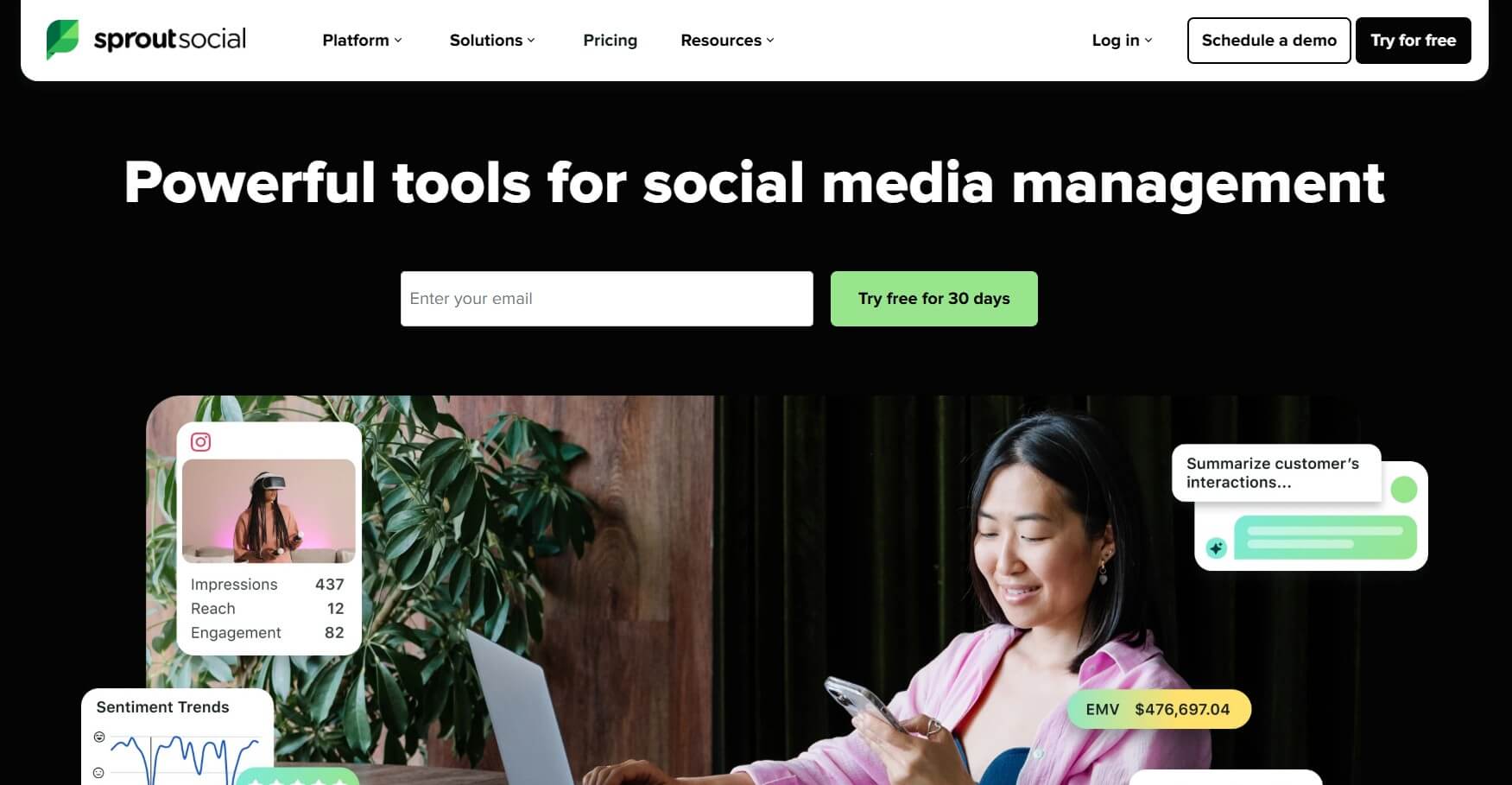
Available on: Web, iOS, Android
What it is:
An enterprise-level social media platform focused on scheduling, analytics, reporting, and customer engagement.
Best for:
Large brands and agencies that rely on data, reporting, and structured team workflows.
Key features
- Scheduling with calendar and queue management
- ViralPost® (optimal send time suggestions)
- Advanced analytics and custom reporting
- Social listening and sentiment analysis
- Content approval workflows and task assignments
- CRM and customer interaction tracking
What works well
- Deep analytics and reporting capabilities
- Strong team collaboration and approval system
- Social listening built into the platform
- Reliable for managing multiple accounts
Where it falls short
- Expensive (starts high per user)
- Takes time to learn and set up
- Overkill for simple scheduling needs
Honest take
Sprout Social is less about posting—and more about understanding performance and managing scale. If data matters, it earns its price. If not, it’s too much.
Time saved
6–10 hours per week (for enterprise teams)
Who should skip it
- Small teams or solo creators
- Users who only need scheduling
Bottom line
One of the strongest tools for analytics and reporting—but only worth it if you actually use those features.
Check Sprout Social’s official pricing page for the latest plan details and offers.
6. SocialBee
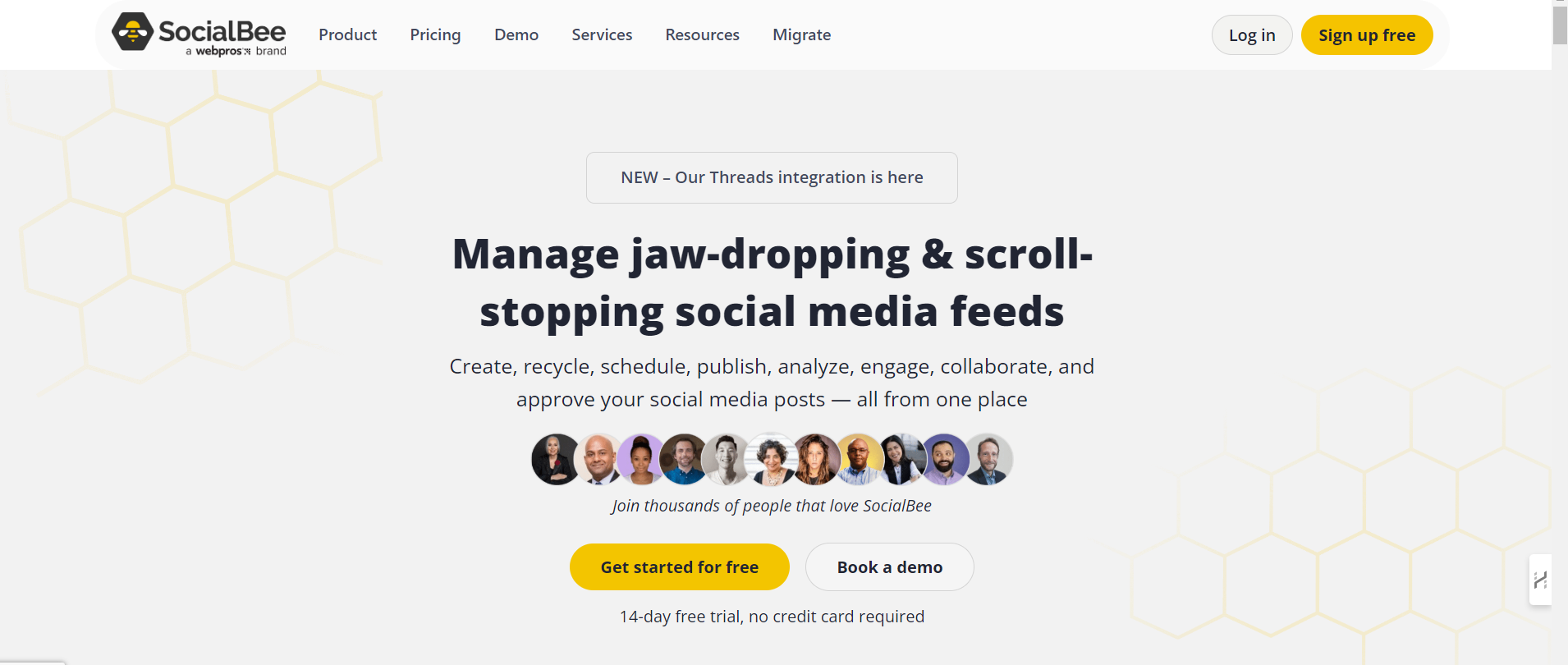
Available on: Web, iOS, Android
What it is:
A scheduling tool built around content categories and evergreen posting.
Best for:
Businesses that want consistent posting using reusable content.
Key features
- Category-based scheduling (organize posts by type)
- Evergreen content recycling (auto-repost top content)
- AI caption generation and suggestions
- Content calendar with scheduling control
- Social inbox for comments and messages
- Basic analytics and reporting
What works well
- Keeps content consistent without manual rescheduling
- Strong system for organizing different content types
- Saves time with automatic reposting
- Good balance between features and pricing
Where it falls short
- Interface feels less polished than competitors
- Limited design and video capabilities
- Not ideal for real-time or trend-based content
Honest take
SocialBee is built for structure. If your content strategy includes repeating and reusing posts, it quietly becomes one of the most useful tools in your stack.
Time saved
4–6 hours per week
Who should skip it
- Users focused on trending or real-time content
- Teams needing advanced design or video tools
Bottom line
A strong option for consistent, long-term content planning—especially if you rely on evergreen posts.
Check SocialBee’s official pricing page for the latest plan details and offers.
CATEGORY 3: AI Writing Tools
For people who are tired of staring at a blank caption box longer than they spend posting
These tools focus on writing faster and better—without handling scheduling, design, or publishing.
7. Jasper

Available on: Web, Chrome Extension
What it is:
An AI writing platform designed for marketing teams that need consistent, high-quality content across channels.
Best for:
Content teams and businesses that care about brand voice and long-term consistency.
Key features
- AI content generation for captions, posts, blogs, and ads
- Brand voice training (custom tone and style)
- Pre-built templates for social media content
- Long-form and short-form writing support
- Team collaboration with shared brand guidelines
- Campaign workflows for multi-content creation
What works well
- Produces more polished, structured content than most tools
- Strong brand voice consistency across outputs
- Useful for both short captions and long-form content
- Well-suited for teams working on campaigns
Where it falls short
- No built-in scheduling or publishing
- Requires time to train for best results
- More expensive than simpler writing tools
Honest take
Jasper is less about speed and more about quality control at scale. If your content needs to sound consistent across platforms, it does that well.
Time saved
3–5 hours per week (on writing tasks)
Who should skip it
- Users looking for an all-in-one tool
- Solo creators needing quick, simple captions
Bottom line
One of the strongest tools for structured, brand-consistent writing—if content quality is your priority.
Check Jasper’s official pricing page for the latest plan details and offers.
8. FeedHive
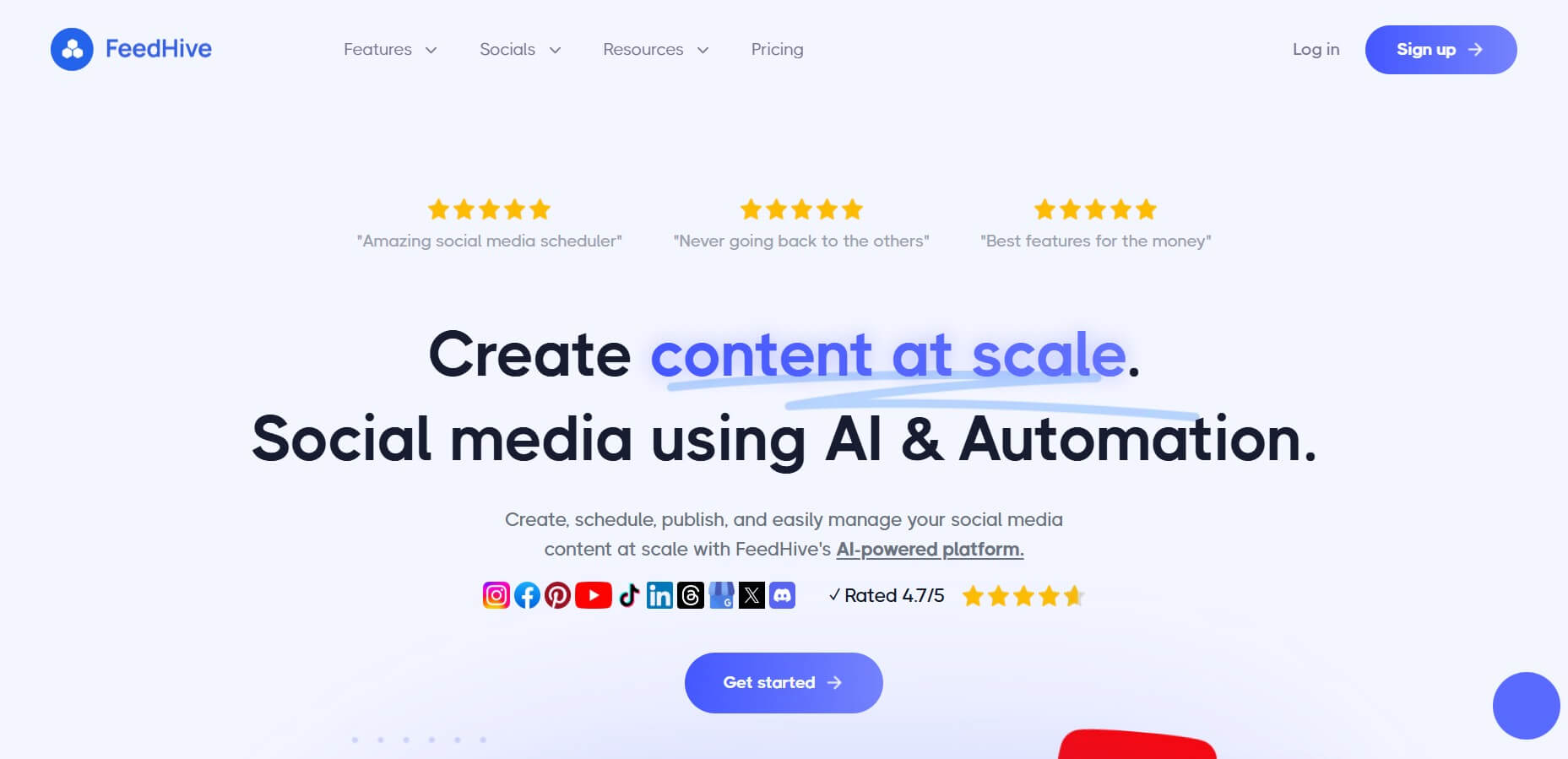
Available on: Web
What it is:
A social media tool focused on content writing, scheduling, and performance insights.
Best for:
Marketers who want more control over how content performs—not just how it’s written.
Key features
- AI writing assistant for captions and posts
- Content calendar and scheduling
- Performance prediction for posts
- Conditional posting (e.g., auto-delete or repost based on engagement)
- Content recycling options
- Analytics dashboard
What works well
- Predicts how posts might perform before publishing
- Offers more control over post behavior after publishing
- Combines writing and scheduling in one tool
- Useful for testing and improving content
Where it falls short
- Interface can feel complex at first
- Not beginner-friendly
- Design and media capabilities are limited
Honest take
FeedHive is built for people who like experimenting and improving content over time. It’s less plug-and-play, more “tweak and optimize.”
Time saved
4–5 hours per week
Who should skip it
- Beginners looking for a simple tool
- Users who don’t need performance-based adjustments
Bottom line
A solid choice if you want more control over how your content performs—not just how it’s written.
Check FeedHive’s official pricing page for the latest plan details and offers.
9. Copy.ai
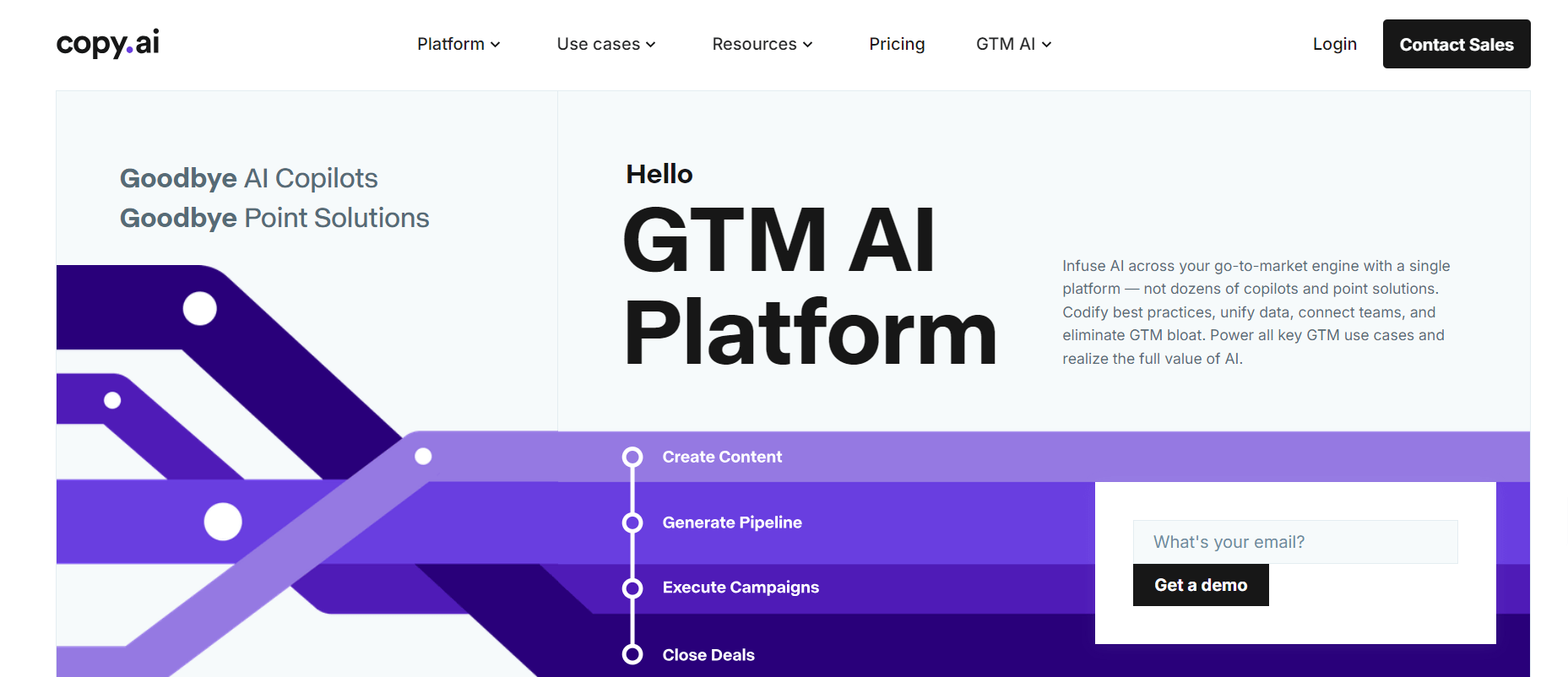
Available on: Web, Chrome Extension
What it is:
An AI copywriting tool built for generating marketing and social media content quickly.
Best for:
Solopreneurs and marketing teams that need high-volume content without a steep learning curve.
Key features
- 90+ templates for social media captions, hooks, and ads
- AI-generated short-form content
- Brand voice customization
- Workflow builder for repetitive writing tasks
- Multi-language support
- Content library for saved outputs
What works well
- Fast content generation with minimal setup
- Easy to use compared to more advanced tools
- Wide variety of templates for different use cases
- Free plan is useful for getting started
Where it falls short
- Output quality can vary without editing
- Brand voice is less refined than Jasper
- No built-in scheduling or publishing
Honest take
Copy.ai is built for speed. It helps you get from idea to draft quickly—but you’ll still want to refine the final output.
Time saved
3–4 hours per week
Who should skip it
- Teams needing highly polished, brand-specific writing
- Users looking for publishing or scheduling features
Bottom line
A practical tool for generating content quickly—especially if volume matters more than precision.
Check Copy.ai’s official pricing page for the latest plan details and offers.
CATEGORY 4: Design Tools
For people who know visuals matter—but don’t want to open complex design software every time
These tools focus on creating social media graphics quickly, even if you don’t have a design background.
10. Canva
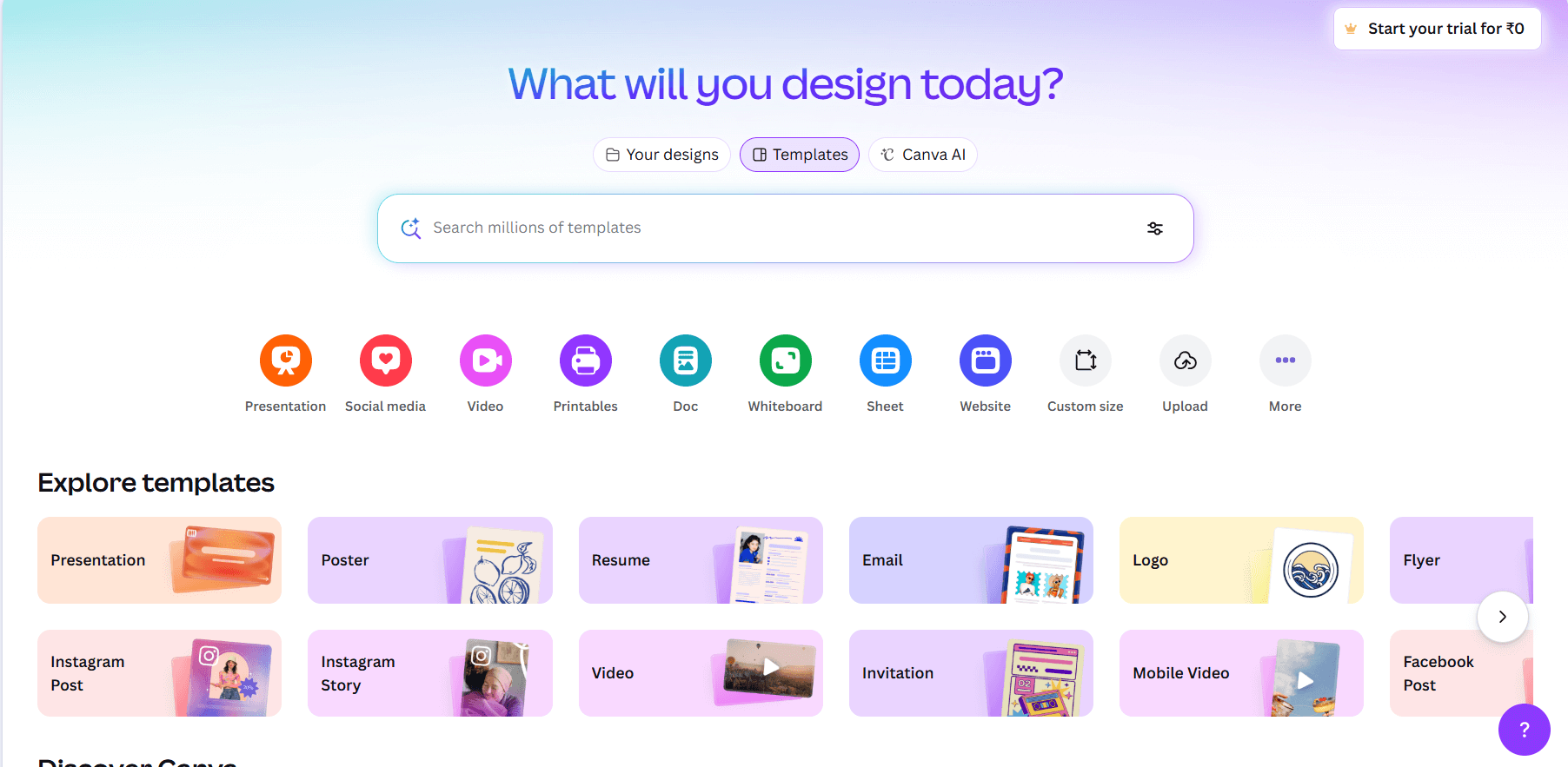
Available on: Web, iOS, Android
What it is:
A widely used design platform with templates for social media, presentations, and marketing materials.
Best for:
Beginners, small businesses, and teams creating everyday social media visuals.
Key features
- Drag-and-drop editor with thousands of templates
- Social media post, story, and ad templates
- AI tools like Magic Write and background remover
- Brand kit (colors, fonts, logos)
- Stock image, video, and element library
- Basic video editing
What works well
- Extremely beginner-friendly
- Huge template library for quick content creation
- Works well for both individuals and teams
- Free plan is strong enough for most users
Where it falls short
- Limited control compared to professional design tools
- Repetitive designs if templates aren’t customized
- Not ideal for complex or highly original design work
Honest take
Canva is built for speed and accessibility. It’s not meant for deep design work—it’s meant to help you get good visuals out quickly.
Time saved
4–6 hours per week
Who should skip it
- Professional designers needing advanced control
- Teams focused on highly custom visual branding
Bottom line
If you need consistent, decent-looking visuals without design experience, Canva is hard to beat.
Check Canva’s official pricing page for the latest plan details and offers.
11. Adobe Express

Available on: Web, iOS, Android
What it is:
A lightweight design tool from Adobe focused on quick content creation for social media.
Best for:
Users who want better design flexibility than Canva but without full Adobe complexity.
Key features
- Ready-to-use social media templates
- Quick actions (resize, background removal, animations)
- Adobe Fonts and stock assets
- Brand kit and design presets
- Basic video and animation tools
- Integration with Adobe Creative Cloud
What works well
- Cleaner, more polished visual output
- Strong asset library and typography options
- Faster than traditional Adobe tools
- Good balance between simplicity and control
Where it falls short
- Smaller template library than Canva
- Less intuitive for beginners
- Limited advanced editing compared to full Adobe tools
Honest take
Adobe Express sits between Canva and Photoshop. It gives you more control than Canva—but without overwhelming you.
Time saved
3–5 hours per week
Who should skip it
- Complete beginners who want plug-and-play templates
- Designers who already use full Adobe tools
Bottom line
A solid option if you want cleaner designs without jumping into complex software.
Check Adobe Express’s official pricing page for the latest plan details and offers.
CATEGORY 5: Video & Repurposing Tools
For people trying to turn one video into multiple pieces of content without spending hours editing
These tools focus on editing, clipping, and repurposing video content for social media.
12. Opus Clip
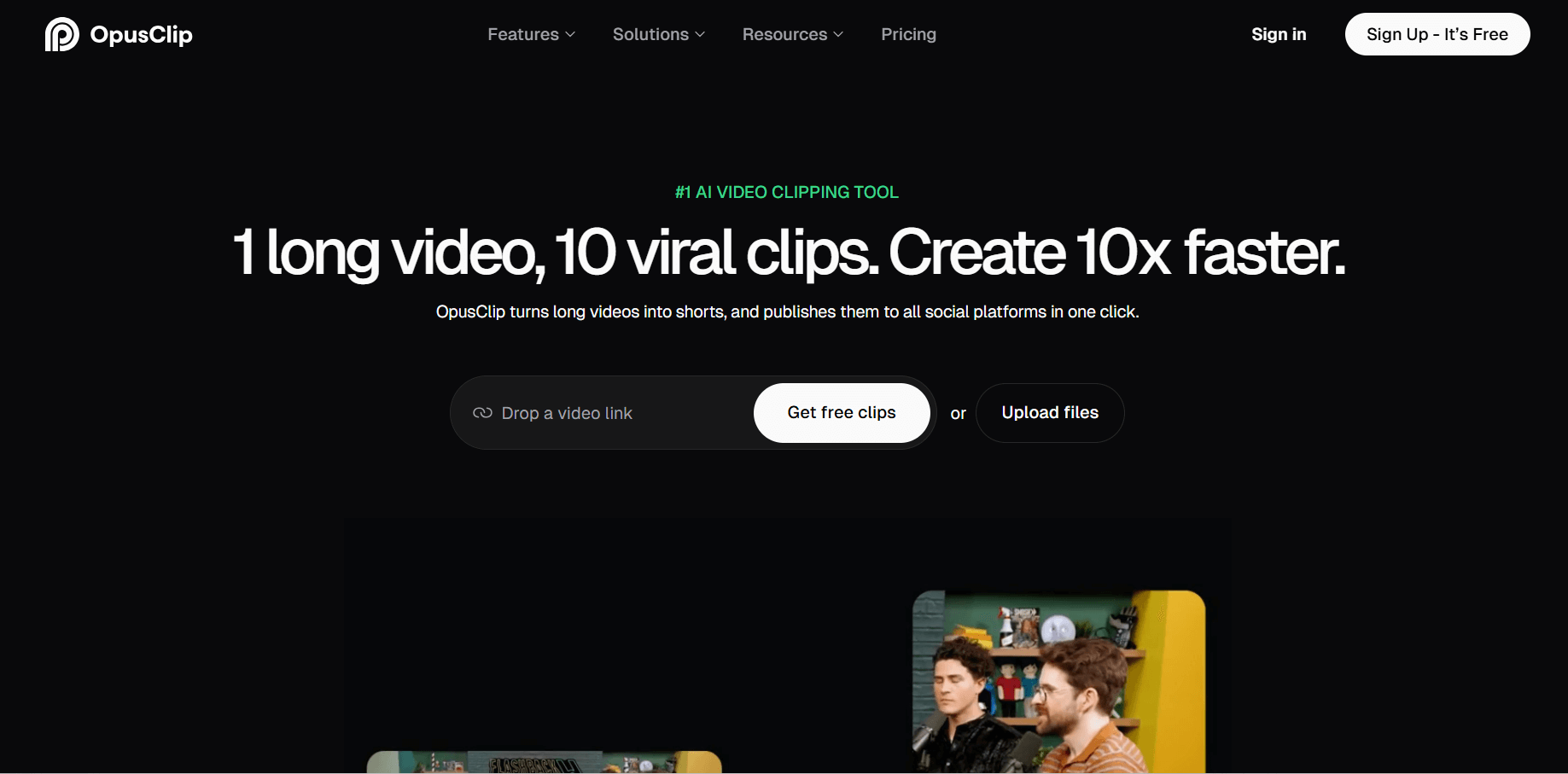
Available on: Web
What it is:
An AI video tool that turns long-form videos into short, shareable clips for social media.
Best for:
Creators, educators, and brands repurposing podcasts, webinars, or YouTube videos into short-form content.
Key features
- Automatic clipping from long videos
- AI-generated captions and subtitles
- Social media resizing (vertical, square formats)
- Highlight detection based on engagement potential
- Multiple clips generated from a single video
What works well
- Saves significant time on manual editing
- Great for consistent short-form content production
- Easy to use with minimal setup
- Works well for podcasts and talking-head videos
Where it falls short
- Limited manual editing controls
- Clips may need minor adjustments
- Not suitable for creating videos from scratch
Honest take
Opus Clip is a repurposing tool, not a full editor. It handles the heavy lifting—but you’ll still want to refine the final output.
Time saved
5–8 hours per week
Who should skip it
- Users creating original videos from scratch
- Editors who want full control over every detail
Bottom line
One of the fastest ways to turn long content into short, social-ready clips.
Check Opus Clip’s official pricing page for the latest plan details and offers.
13. Pictory
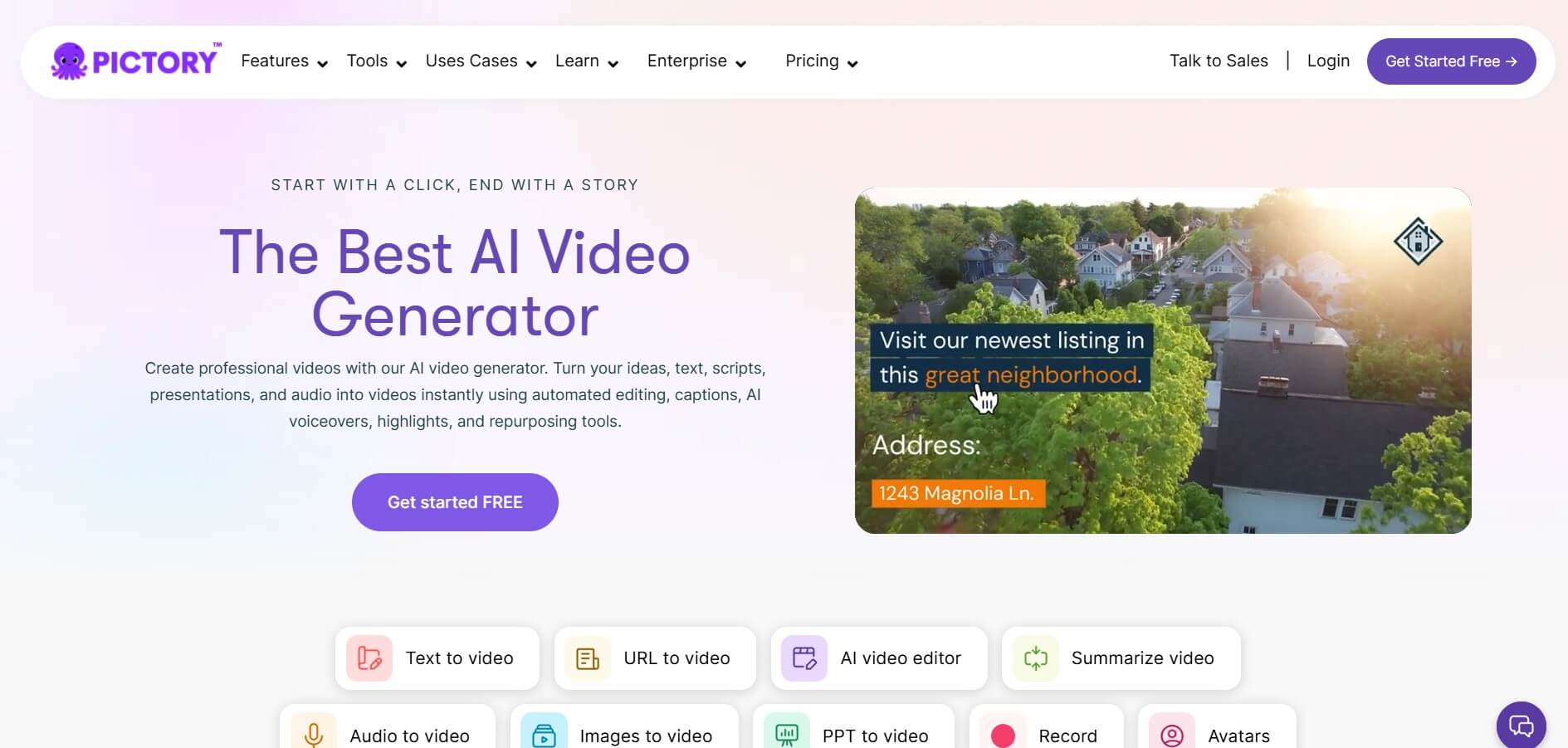
Available on: Web
What it is:
A video creation tool that converts text, scripts, or blog posts into videos.
Best for:
Businesses and marketers who want to create videos without filming.
Key features
- Text-to-video generation
- Script-based video creation
- AI voiceovers and subtitles
- Stock footage and music library
- Automatic scene creation
What works well
- No filming or editing experience required
- Quick way to convert blogs into videos
- Simple workflow for content creation
- Useful for educational or promotional content
Where it falls short
- Output can feel generic without customization
- Limited creative control
- Not ideal for highly engaging social-first videos
Honest take
Pictory is built for speed and convenience. It is working best when you need content quickly—not when you need something highly unique.
Time saved
4–6 hours per week
Who should skip it
- Creators focused on personality-driven content
- Teams needing advanced editing features
Bottom line
A practical option for turning written content into video with minimal effort.
Check Pictory’s official pricing page for the latest plan details and offers.
Feature Comparison Matrix
| Tool | Content AI | Scheduling | Analytics | Social Listening | Design Tools | Video | Multi-Platform |
|---|---|---|---|---|---|---|---|
| Simplified | ✓✓✓ | ✓✓ | ✓ | – | ✓✓✓ | ✓✓✓ | ✓✓ |
| PostEverywhere | ✓✓ | ✓✓ | – | ✓ | – | ✓ | ✓✓ |
| Hootsuite | ✓✓ | ✓✓ | ✓✓ | ✓✓ | – | – | ✓✓✓ |
| Buffer | ✓✓ | ✓✓ | ✓✓ | – | – | – | ✓✓✓ |
| Sprout Social | ✓✓ | ✓✓ | ✓✓ | ✓✓ | – | – | ✓✓✓ |
| SocialBee | ✓✓ | ✓✓ | ✓✓ | – | – | – | ✓✓✓ |
| Jasper | ✓✓ | – | – | – | – | – | ✓✓ |
| FeedHive | ✓✓ | ✓✓ | ✓✓ | – | ✓ | – | ✓✓ |
| Copy.ai | ✓✓ | – | – | – | – | – | ✓✓ |
| Canva | ✓✓ | – | ✓ | – | ✓✓ | ✓✓ | ✓✓ |
| Adobe Express | ✓✓ | – | – | – | ✓✓ | ✓✓ | ✓✓ |
| Opus Clip | – | – | ✓ | – | – | ✓✓ | ✓✓✓ |
| Pictory | – | – | ✓ | – | ✓ | ✓✓ | ✓✓✓ |
Legend: ✓ = Basic | ✓✓ = Strong | ✓✓✓ = Excellent | – = Not available
Key Capabilities by Category at a Glance
AI Content Creation :
- Simplified — Full AI copywriting + design + video content
- Jasper — Best-in-class pure AI writing
- Copy.ai — High-volume social copy with 90+ templates
- PostEverywhere — All-in-one AI content generation
- SocialBee — Strong AI caption generation
Scheduling & Automation:
- Hootsuite — Multi-account management at scale
- SocialBee — Evergreen content recycling
- Buffer — AI optimal timing suggestions
- FeedHive — Conditional posting logic
- Sprout Social — Enterprise-grade scheduling
- Simplified — All-in-one scheduling with built-in content calendar
Analytics & Insights:
- Sprout Social — Best-in-class comprehensive analytics
- Hootsuite — Advanced multi-account reporting
- FeedHive — Predictive performance analytics
- SocialBee — Content category performance tracking
Social Listening:
- Sprout Social — Industry-leading listening + sentiment analysis
- Hootsuite — Competitive monitoring + brand tracking
Design Integration:
- Canva — Best template library + design + scheduling
- Simplified — AI design within full all-in-one platform
- Adobe Express — Firefly AI image generation quality
- Pictory — Brand kit for video design consistency
Video:
- Simplified — AI video generation and editing within all-in-one platform
- Opus Clip — Best for long-form to short-form repurposing
- Pictory — Best for written content to video conversion
- Canva — Basic AI video editing for social content
Multi-Platform Management:
- Hootsuite — Most accounts, best team workflows
- Sprout Social — Enterprise multi-platform + CRM
- PostEverywhere — Cross-posting automation
- Buffer — Simple, reliable multi-platform scheduling
- SocialBee — Multi-platform with evergreen recycling
ROI Calculator: How Much Time Are You Actually Saving?
AI social media tools save marketers an average of 10 hours per week — equivalent to a full working day returned to your schedule every single week.
Here is exactly where those hours come from:
| Task | Manual | With AI | Saved |
|---|---|---|---|
| Writing captions | 3.5 hrs | 45 min | 2.75 hrs |
| Graphic design | 2.5 hrs | 30 min | 2 hrs |
| Scheduling | 1.5 hrs | 15 min | 1.25 hrs |
| Video editing | 2.5 hrs | 25 min | 2 hrs |
| Analytics review | 1.5 hrs | 20 min | 1.2 hrs |
| Total | 11.5 hrs | 2.1 hrs | ~10 hrs |
What Is That Worth in Real Money?
| Role | Hourly Rate | Monthly Value Recovered |
|---|---|---|
| In-house marketer | $35/hr | $1,400/month |
| Agency / freelancer | $75/hr | $3,000/month |
| Senior strategist | $120/hr | $4,800/month |
Even at Sprout Social’s $249/month price point — the most expensive tool on this list — the recovered time pays for itself within the first two working days of the month.
The 300% average ROI on AI social media tools makes complete sense once you run this math. The question was never whether to invest. It is which tool fits your workflow.
How to Pick the Right AI Tools — Answer 3 Main Questions

The right AI social media tool is determined by your biggest bottleneck, your budget, and your team size — in that order.
1: What Is Your Biggest Bottleneck?
| Problem | Best Tool |
|---|---|
| Too many tools to manage | Simplified, PostEverywhere |
| Multiple accounts or clients | Hootsuite, Sprout Social |
| Slow caption writing | Jasper, Copy.ai, FeedHive |
| Inconsistent posting | Buffer, SocialBee |
| Weak visual content | Canva, Adobe Express |
| No short-form video | Opus Clip, Pictory |
2: What Is Your Budget?
| Budget | Options |
|---|---|
| $0–$20/month | Buffer, PostEverywhere, Canva, Copy.ai |
| $20–$100/month | FeedHive, SocialBee, Simplified, Jasper |
| $100–$300+/month | Hootsuite, Sprout Social |
3: What Is Your Team Size?
| Team Size | Best Fit |
|---|---|
| Solo creator | Buffer, Canva, Simplified free |
| Small team (2–5) | SocialBee, FeedHive, Simplified paid |
| Agency or enterprise | Hootsuite, Sprout Social |
Future Outlook — Where AI Social Media Tools Are Heading in 2026–2027
By 2027, AI is predicted to generate over 90% of social media content — making tool selection today one of the most important strategic decisions a marketing team can make.
The platforms reviewed in this article are already impressive. However, what is coming next makes current capabilities look like a warm-up act.
Predicted Developments in AI Social Media (2026–2027)
| Development | What It Means For Marketers |
|---|---|
| AI generates 90%+ of social content | Human role shifts from creation to strategy and oversight |
| Video AI generation becomes standard | Tools like Opus Clip and Pictory become baseline, not advanced |
| Real-time trend adaptation | AI auto-adjusts content based on trending topics without manual input |
| Voice and conversational AI integration | Content created and scheduled via voice commands |
| Advanced individual-level personalization | Each follower sees content tailored specifically to them |
| Automated community management | AI handles comments, DMs, and engagement responses at scale |
| Cross-platform story automation | One input automatically generates platform-native stories across all channels |
Skills Social Media Managers Will Need in 2027
As AI handles more execution, the most valuable social media managers will be those who can direct, interpret, and strategize — not just create.
Consequently, the skills that will matter most are:
- AI prompt engineering — knowing how to instruct AI tools to produce on-brand output
- Data analysis — interpreting AI-generated performance reports into actionable decisions
- Strategy and oversight — setting direction that AI executes
- Community relationship building — the human element AI cannot fully replicate
- Trend identification — spotting what is relevant before AI catches up
- Cross-functional collaboration — connecting social media output to broader business goals
What This Means For Your Tool Selection Today
The tools you choose now should not just solve today’s problems. Furthermore, they should be platforms actively investing in these capabilities — because the gap between teams using next-generation AI tools and those still switching between five tabs is only going to widen.
💡 The marketers who will win in 2027 are not the ones who resist AI. They are the ones who learned to direct it in 2026.
The Bottom Line
The AI social media tool market in 2026 splits into three tiers:
Free to $20/month: Buffer, Simplified, Mirra, Canva. Best for solo creators and small businesses. You get scheduling, basic AI, and either design tools or content recycling.
$20-50/month: SocialBee, FeedHive. Best for growing brands. You get stronger AI, deeper analytics, and features like conditional posting or content recycling.
$100+/month: Hootsuite, Sprout Social. Best for agencies and enterprises. You get multi-account management, social listening, CRM integration, and enterprise reporting.
For most small businesses and creators, Simplified at $20/month delivers the most value: AI writing, graphic design, video editing, and eight-platform scheduling in one subscription. That’s four tools for the price of one.
Start with a free plan. Run your workflow for two weeks. Measure how much time you save. Then decide if upgrading makes financial sense for your situation.
Frequently Asked Questions About AI Social Media Tools
What is the best AI social media tool in 2026?
The best AI social media tool in 2026 is Simplified for most users because it combines AI writing, graphic design, video editing, and scheduling in one platform. However, Sprout Social is the best choice for enterprise teams needing advanced analytics and social listening.
How much time can AI social media tools realistically save?
AI social media tools save marketers an average of 10 hours per week — approximately 2.75 hours on writing, 2 hours on design, 2 hours on video, 1.25 hours on scheduling, and 1.2 hours on analytics review.
Are there free AI tools for social media that actually work?
Yes. Simplified, Buffer, Canva, Copy.ai, and Adobe Express all offer genuinely useful free plans. Furthermore, PostEverywhere offers a free all-in-one tier that covers content creation and scheduling without any cost.
What is subscription sprawl in social media marketing?
Subscription sprawl is when marketers stack multiple single-purpose tools — one for design, one for writing, one for scheduling — until the combined monthly cost and daily context-switching creates more problems than the tools solve. The average stacked setup costs approximately $105/month.
Is an all-in-one tool better than using specialist tools?
For teams of 1–10 people, an all-in-one tool like Simplified is generally better because it eliminates context-switching, reduces costs, and simplifies team onboarding. However, enterprise teams with specific CRM or compliance requirements may still benefit from specialist platforms.
What is the best AI social media tool for small businesses?
The best AI social media tool for small businesses is Simplified or SocialBee. Simplified covers the full content workflow in one platform, while SocialBee offers strong AI caption generation and evergreen content recycling at $29/month.
What is the best AI tool for scheduling social media posts?
The best AI scheduling tools are Buffer for beginners, SocialBee for evergreen content strategies, Hootsuite for multi-account management, and Sprout Social for enterprise-level scheduling with advanced analytics.
Do I need separate tools for writing, design, and scheduling?
No. All-in-one platforms like Simplified and PostEverywhere handle writing, design, and scheduling within a single platform. Consequently, most teams with 1–10 people do not need separate specialist tools unless they have specific enterprise requirements.