By
By The way people shop is changing faster than anyone predicted. In 2026, 73% of consumers are already using AI in their shopping journey—and that number is climbing every week. If you’re running an ecommerce business and haven’t heard of “agentic commerce” yet, you’re about to discover why it’s the most important trend of 2026.
Here’s what’s happening: AI agents like ChatGPT, Perplexity, Claude, and Gemini are no longer just answering questions. They’re becoming shopping assistants—browsing products, comparing options, and making recommendations on behalf of consumers. Right now, 37% of product discovery queries start in AI interfaces, not Google.
This shift is creating winners and losers. Products with properly optimized content are appearing in AI recommendations 3-5 times more often than those without. Meanwhile, businesses that haven’t adapted are becoming invisible to this massive new traffic source.
The good news? You don’t need an enterprise budget or a data science degree to compete. This guide will show you exactly what agentic commerce is, how AI agents discover and recommend products, and the practical steps you can take today to optimize your product content—even if you’re a small business with limited resources.
What is Agentic Commerce?
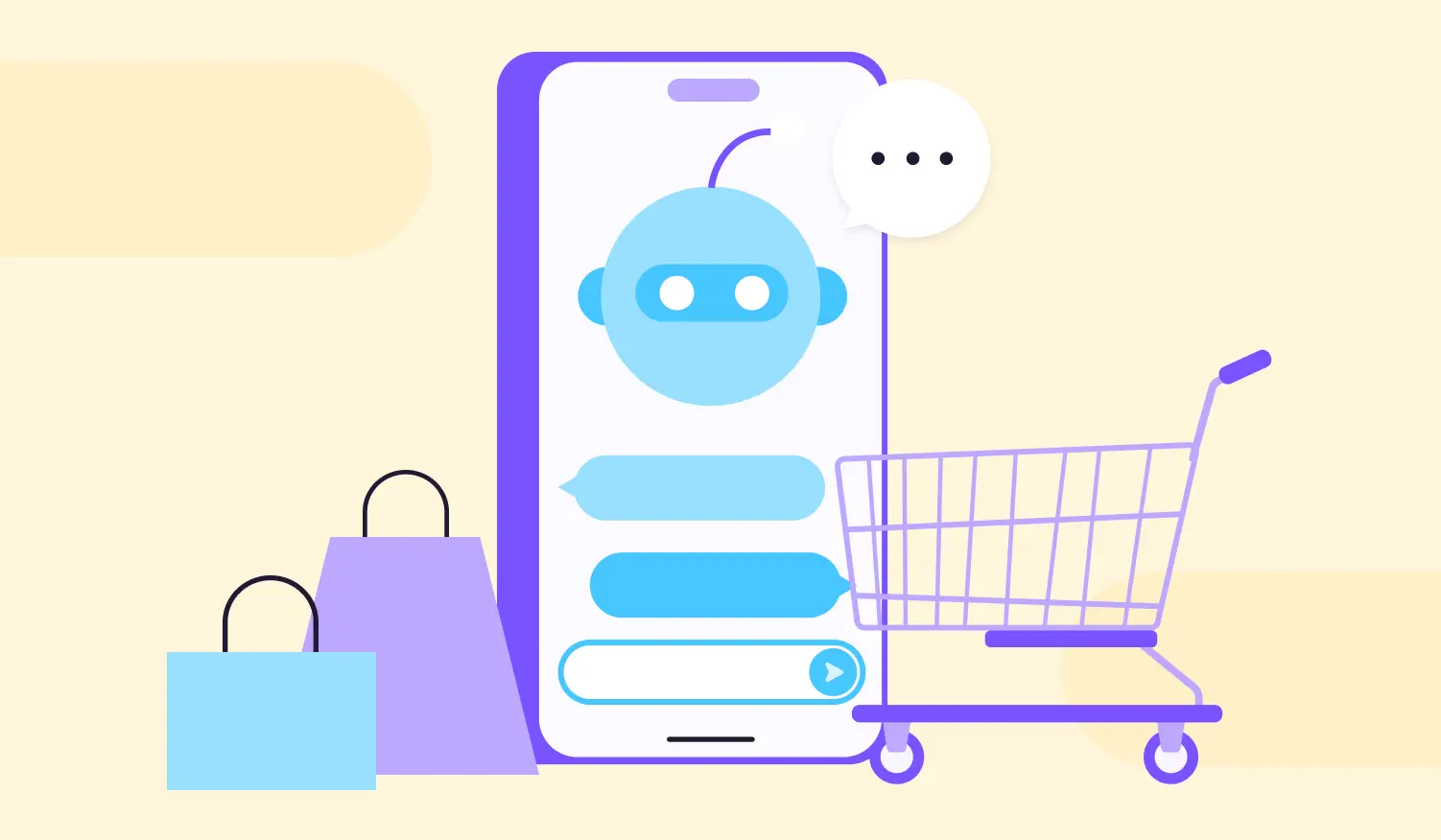
Agentic commerce refers to AI agents mediating shopping decisions on behalf of consumers. Instead of searching Google, clicking through results, and comparing products manually, shoppers are now asking AI assistants: “Find me the best wireless headphones under $150 with noise cancellation and at least 8-hour battery life.”
The AI agent then browses the web, analyzes dozens of products, compares specifications, reads reviews, and delivers a curated recommendation—often with direct purchasing options built right into the conversation.
How Agentic Commerce Works
Here’s a typical agentic commerce journey:
- Consumer asks AI agent: “I need a laptop for video editing under $1,000”
- AI agent researches: Browses multiple ecommerce sites, reads product specifications, analyzes reviews
- AI agent compares: Evaluates 20-50 products against the consumer’s criteria
- AI agent recommends: Presents 3-5 best options with explanations
- Consumer purchases: Either through the AI platform or clicks through to the retailer
This is fundamentally different from traditional ecommerce where consumers do all the research themselves.
The Scale of Agentic Commerce in 2026
The numbers are staggering:
- 73% of consumers now use AI in their shopping journey
- 45% use AI for product ideas
- 37% use AI to summarize reviews
- 32% use AI to compare prices
- 37% of product discovery queries start with AI agents, not traditional search engines
On Black Friday 2025, AI-referred traffic to U.S. retail sites jumped 805% year-over-year. Even more compelling: shoppers arriving from AI services were 38% more likely to complete a purchase.
McKinsey estimates agentic commerce could influence $3-5 trillion in global retail spend by 2030, with up to $1 trillion in the U.S. alone.
Major Platforms Powering Agentic Commerce
ChatGPT Shopping Research: OpenAI launched shopping capabilities powered by GPT-5 mini specifically trained for shopping tasks. ChatGPT now partners with Target, Instacart, and DoorDash to enable purchases directly within conversations. The platform analyzes products based on relevance—not paid placement—and builds on your conversation history to deliver personalized recommendations.
Perplexity Shopping: Perplexity rolled out free agentic shopping for U.S. users in November 2025, with PayPal integration for seamless checkout. The platform offers a merchant program where brands submit product feeds for better visibility. Most merchants see visibility gains within 4-6 weeks of optimizing.
Google Universal Commerce Protocol: Just launched January 11, 2026 at the National Retail Federation show, Google’s UCP (in partnership with Shopify, Target, Walmart, and Etsy) enables AI agents to automate the entire shopping journey from discovery to checkout using Google Pay and shipping details from Google Wallet.
Shopify Agentic Storefronts: Shopify’s Winter 2026 Edition allows merchants to sell products directly within AI conversations on ChatGPT, Perplexity, and Microsoft Copilot through one-click catalog syndication. As Shopify CEO Tobi Lütke puts it: “Like, I would never have searched for this product, but somehow it found me right on the other side.”
The Timeline: Why 2026 is the Breakout Year
Consumer behavior that took 10 years during the ecommerce rise (1995-2005) is transforming in just 12-24 months with agentic commerce. Industry leaders are calling 2026 “the breakout year” because all the major platforms launched shopping capabilities simultaneously in late 2025 and early 2026.
Visa executives predict the commercial use of personalized, secure agent transactions will arrive as early as the first quarter of 2026. The infrastructure is here. The consumer behavior is shifting. The question is: are you ready?
Why Product Content Optimization Matters for Agentic Commerce
The “Invisible Shelf” Problem
Here’s the harsh reality: if your product data isn’t structured for AI agents, you simply won’t surface in their recommendations. This creates what industry experts call the “invisible shelf”—products that exist but might as well not, because AI agents can’t find, understand, or recommend them.
Unlike Google, where you might still get some organic traffic even with mediocre SEO, AI agents operate on a much stricter standard. They need clean, structured, detailed product information to even consider your product. No structure = no visibility = no sales.
Discovery vs. Conversion: Where AI Has the Biggest Impact
Agentic AI is changing behavior fastest in the “help me figure this out” middle of the journey. As Kaare Wesnaes from Ogilvy North America explains: “Agentic AI will change the top of the shopping journey first.”
AI agents dominate the discovery and research phase—approximately 90% of their impact happens at the top of the funnel. Consumers use AI to:
- Find products they didn’t know existed
- Compare options across dozens of brands
- Understand specifications and features
- Read summarized reviews
- Narrow down choices
By the time a consumer reaches your product page, the AI agent has already done most of the work. But here’s the catch: if your product wasn’t in the AI’s initial research pool, you never had a chance to compete.
The Shift from SEO to GEO
Traditional search engine optimization (SEO) focused on ranking in Google’s link results. You optimized for keywords, built backlinks, and aimed for the top 10 positions.
Generative Engine Optimization (GEO) is fundamentally different. You’re optimizing for citations and references in AI-generated answers. The goal isn’t click-through rates—it’s reference rates: how often your product is mentioned, cited, or recommended by AI agents.
Google’s AI Overviews now appear on billions of searches every month—at least 13% of all search results pages. Products with comprehensive schema markup appear in AI-generated recommendations 3-5 times more frequently than those without.
The metrics have changed. The tactics have changed. And businesses that treat this like “SEO 2.0” will miss the point entirely.
Real Business Impact
Consider this data from eMarketer: McKinsey found that 44% of users who try AI-powered search prefer it over traditional search. Additionally, 41% of consumers trust generative AI search results more than traditional advertising, and 85% express higher satisfaction with AI-assisted shopping journeys.
For retailers specifically, traffic from AI sources surged 1,200% while traditional search traffic declined 10% year-over-year. The channel shift is real, it’s happening now, and it’s accelerating.
How AI Agents Evaluate and Recommend Products
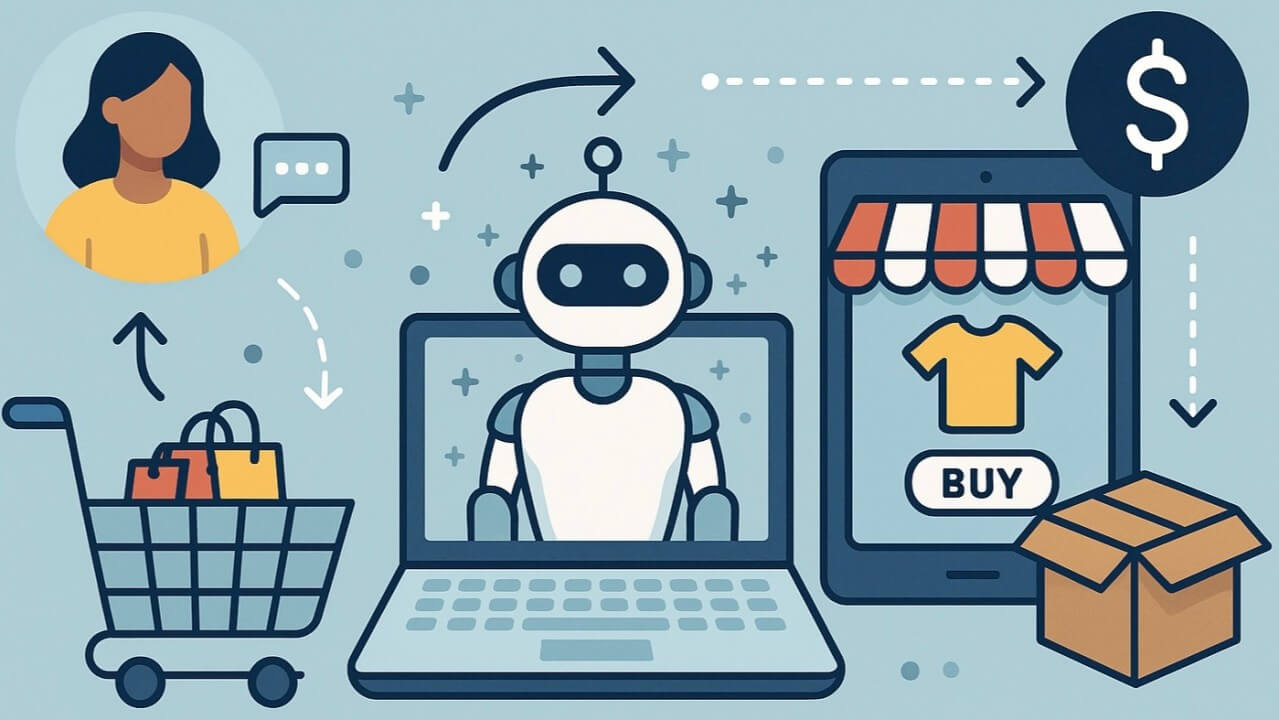
Understanding how AI agents actually work is critical to optimizing for them. Let’s break down the mechanics.
Conversational Queries and Intent Understanding
AI agents process shopping queries very differently from search engines. A consumer might ask:
“I’m looking for a coffee maker that’s easy to clean, makes great espresso, and doesn’t take up too much counter space. Budget is around $300. What do you recommend?”
The AI agent extracts multiple criteria from this single query:
- Product type: espresso/coffee maker
- Ease of cleaning
- Quality of espresso
- Compact size
- Budget: ~$300
Then it browses 20-50 products, evaluates them against ALL these criteria, and recommends the best matches.
Multi-Source Synthesis
Unlike a search engine that returns links, AI agents read and synthesize information from multiple sources. For a single product recommendation, an AI might:
- Read the product page on your website
- Check prices across multiple retailers
- Analyze 50+ customer reviews
- Compare specifications with competing products
- Verify availability and shipping times
- Check for certifications or awards
The AI is looking for consistent, detailed, trustworthy information. Vague marketing copy doesn’t cut it.
Citation and Authority Bias
AI agents prefer well-structured, authoritative content. If your product information is incomplete, contradictory across sources, or lacks structured data, the AI is more likely to skip it in favor of better-documented alternatives.
BrightEdge research demonstrated that schema markup improved brand presence and perception in Google’s AI Overviews, with higher citation rates on pages with robust structured data.
The Role of Reviews and Social Proof
AI agents are “highly sensitive to product reviews.” Positive, detailed reviews dramatically increase the probability of recommendation.
Here’s what matters:
- Review volume: More reviews = more data for AI to analyze
- Review detail: “Great product!” tells the AI nothing. “The noise cancellation works perfectly on flights, battery lasts exactly as advertised (8+ hours), and the fit is comfortable for my large ears” gives the AI usable data
- Recent reviews: Fresh reviews signal the product is currently popular
- Response to reviews: Brands that respond to reviews appear more trustworthy
AI agents weight social proof heavily because they’re trying to predict satisfaction. Reviews are the best proxy for that.
How AI Agents Compare Products
When an AI agent evaluates your product against competitors, it’s looking for explicit differentiation:
- Specifications: Does this laptop have 16GB RAM or 8GB?
- Use cases: Is this described as “best for gaming” or “best for business travel”?
- Price-value relationship: Why is this $200 more than a similar product?
- Unique features: What does this product offer that others don’t?
Products that clearly articulate their differentiators get recommended. Those with vague descriptions get passed over.
Product Content Optimization Checklist for Agentic Commerce

Here’s your actionable checklist to optimize product content for AI agent discovery and recommendations.
✅ Structured Product Data
What it is: Schema markup and metadata that helps AI agents understand your product details.
What to include:
- Product name and SKU
- Brand
- Price and currency
- Availability status (in stock, out of stock, pre-order)
- Product images (high resolution)
- Category and subcategory
- All attributes: size, color, weight, dimensions, materials, compatibility
- GTIN (Global Trade Item Number)
How to implement: Use JSON-LD schema markup following schema.org’s Product schema. Include offer details, aggregate ratings, and review markup.
Why it matters: Products with comprehensive schema appear in AI recommendations 3-5x more frequently.
✅ Enriched Product Descriptions
What it is: Detailed, conversational descriptions that go beyond basic features.
What to include:
- Detailed specifications (not just “powerful processor”—specify “Intel Core i7-12700H, 12-core, up to 4.7GHz”)
- Benefits and use cases (“Perfect for video editing with 4K timeline scrubbing”)
- Comparison context (“30% faster rendering than previous generation”)
- Materials and construction details
- Who the product is for (“Ideal for professional content creators”)
- What problems it solves
How to write it: Use natural, conversational language. Answer the questions a smart friend would ask before buying.
Why it matters: AI agents need detailed information to match products to specific consumer needs.
✅ Review Optimization
What it is: Encouraging, curating, and responding to customer reviews.
What to do:
- Send post-purchase review requests
- Make leaving reviews easy (one-click from email)
- Respond to reviews quickly (within 24-48 hours)
- Encourage detail: “What specific features did you love?”
- Implement review schema markup
- Display aggregate ratings prominently
Why it matters: 89% of consumers check information before buying, and AI agents synthesize reviews to assess product quality.
✅ Rich Media Assets
What it is: High-quality images, videos, and visual content.
What to include:
- Multiple product images (6-10 minimum)
- Lifestyle images showing the product in use
- Size comparison images
- Close-up detail shots
- 360-degree views if possible
- Product demo videos
- Comparison charts
Why it matters: Modern AI agents can “see” and analyze images, using them to understand product appearance, size, and context.
✅ Semantic SEO and Natural Language
What it is: Using the same language your customers use, not just keyword-stuffed copy.
How to do it:
- Write like you’re explaining the product to a friend
- Use question-based headings: “How long does the battery last?”
- Include natural variations of product terms
- Avoid jargon unless your audience uses it
- Front-load important information (AI agents don’t always read full pages)
Why it matters: AI agents detect unnatural language and keyword stuffing, potentially downranking those products.
✅ Comprehensive FAQs
What it is: Anticipating and answering common questions about your product.
What to include:
- Compatibility questions: “Does this work with iPhone 15?”
- Sizing and fit questions: “I’m 6’2″, will this fit me?”
- Comparison questions: “What’s the difference between the Pro and Standard model?”
- Durability questions: “Is this waterproof?”
- Warranty and return information
How to implement: Use FAQ schema markup so AI agents can easily extract Q&A pairs.
Why it matters: AI agents often look for FAQ content to answer specific consumer queries.
✅ Comparison Content
What it is: Helping AI agents understand when to recommend your product versus alternatives.
What to create:
- “Product A vs Product B” comparison pages
- Feature comparison tables
- “Best [product] for [use case]” guides
- Side-by-side specifications
Why it matters: AI agents trust objective comparisons that include your products AND competitors. It signals confidence and transparency.
✅ Technical Requirements
What to check:
- Allow AI crawlers: Don’t block GPTBot, ClaudeBot, PerplexityBot, or Google-Extended in robots.txt
- Fast page speed: AI agents penalize slow-loading pages
- Mobile optimization: Many AI searches happen on mobile
- Clean HTML: Well-structured code helps AI parsing
- Updated sitemap: Make product pages easily discoverable
How Small Businesses Can Compete in Agentic Commerce

The shift to agentic commerce might sound like it favors big brands with huge budgets. The reality is actually the opposite—this is one of the most accessible opportunities for small businesses in years.
Why Small Businesses Have an Advantage
1. AI Agents Don’t Care About Brand Recognition
Unlike human shoppers who might automatically gravitate to Nike or Apple, AI agents evaluate products purely on merit. If your product better matches the consumer’s criteria and has better data, you can beat a Fortune 500 brand in AI recommendations.
2. Clean Data Beats Marketing Budgets
You can’t pay AI agents for better placement (unlike Google Ads). The playing field is level. A small business with well-structured product data can outperform a large brand with messy, incomplete information.
3. Niche Products Excel in AI Recommendations
AI agents are excellent at matching specific needs. If you sell specialized products for particular use cases, AI agents will find and recommend you to the exact right customers—something that was hard to achieve with traditional advertising.
The Enterprise Tool Problem
Here’s the challenge: many enterprise ecommerce optimization tools cost $800-$2,000 per month. HubSpot’s operations hub with workflow automation runs $800/month. Shopify app stacks can easily exceed $100/month. Advanced SEO tools like BrightEdge are priced for large brands, not small businesses.
Small businesses need accessible solutions that don’t require a massive budget or a team of specialists.
How Simplified Solves the Agentic Commerce Challenge for SMBs
This is where Simplified AI Workflows and Product Description Generator become game-changers.
The All-in-One Approach
Instead of stacking 5 different tools to optimize for agentic commerce, Simplified provides everything in one platform:
- AI-powered product description generation
- Bulk content creation for 100+ products
- Product image generation
- Social media content for product launches
- Brand voice consistency
- Direct export to Shopify and WooCommerce
Cost Comparison:
- Enterprise approach: Describely ($99/mo) + Canva ($13/mo) + Later ($25/mo) + Zapier ($30/mo) = $167/month
- Simplified: $20/month for everything
No-Code Workflow Automation
Simplified AI Workflows let you automate product content optimization without any technical expertise:
- Upload product data (CSV or manual entry)
- AI generates SEO and GEO-optimized descriptions
- AI adds structured data tags for agentic commerce
- AI creates bullet-point feature lists
- Review and approve
- Export to your ecommerce platform
What used to take 5 hours per 100 products now takes 30 minutes.
Maintaining Brand Voice at Scale
The AI Brand Book feature ensures all your product descriptions maintain consistent tone and style—critical when you’re optimizing hundreds of SKUs. AI agents notice inconsistency, and it hurts credibility.
Real Small Business Success Story
A boutique clothing brand used Simplified’s workflows to generate 300 product descriptions in just 2 hours—work that previously took two weeks. After optimizing for agentic commerce with structured descriptions and proper schema markup, they saw:
- 47% increase in traffic from AI platforms within 6 weeks
- 22% higher conversion rate from AI-referred visitors
- Visibility in ChatGPT shopping recommendations for 34 of their products
The total cost? $15/month for Simplified, compared to the $150+/month they would have spent on separate tools.
Tools and Workflows for Product Content Optimization
Let’s walk through the specific tools and workflows you need to prepare for agentic commerce.
Essential Tool Categories
1. AI Product Description Generators
Generate detailed, structured product descriptions at scale. Look for tools that:
- Support bulk generation (100+ products at once)
- Maintain brand voice consistency
- Optimize for both SEO and GEO
- Integrate with your ecommerce platform
Simplified Product Description Generator checks all these boxes and includes product image generation in the same workflow.
2. Schema Markup Tools
Implement structured data on your product pages. Options include:
- Plugin-based solutions (for WordPress/Shopify)
- AI-automated schema generation
- Manual JSON-LD implementation
The key is ensuring your Product, Offer, AggregateRating, and Review schemas are complete and accurate.
3. Review Management
Collect, display, and respond to customer reviews:
- Automated review request emails
- Review aggregation from multiple platforms
- AI-powered response generation
- Review schema implementation
4. Content Enrichment
Expand basic product information with benefits, use cases, and comparisons. Simplified AI Writer can turn sparse product specs into rich, detailed descriptions that AI agents can actually use.
Step-by-Step: Optimizing Your Product Catalog with Simplified
Here’s a practical workflow to optimize your entire product catalog for agentic commerce:
Step 1: Export Your Current Product Data
Download your product catalog from Shopify, WooCommerce, or your ecommerce platform as a CSV file. Include product names, current descriptions, prices, and any existing attributes.
Step 2: Set Up Your Brand Voice
In Simplified’s AI Brand Book, define your brand tone, style, and voice. This ensures consistency across all generated content.
Step 3: Bulk Generate Optimized Descriptions
Upload your product CSV to Simplified AI Workflows. Configure the workflow to:
- Generate 200-300 word detailed descriptions
- Include specifications and benefits
- Add semantic keywords
- Structure for AI agent readability
- Create FAQ sections
Generate descriptions for 100+ products in a single batch.
Step 4: Review and Refine
The AI will flag descriptions that need human review (usually 10-15% of batch). Review these, make adjustments, and approve.
Step 5: Add Product Images
Use Simplified’s AI image generation to create or enhance product images. AI agents analyze visual content, so quality matters.
Step 6: Export and Implement
Export the optimized content and upload it to your ecommerce platform. Most platforms accept CSV bulk imports.
Step 7: Implement Schema Markup
Add Product schema markup to your product pages. If you’re on Shopify or WordPress, use plugins. Otherwise, implement JSON-LD manually or through your developer.
Step 8: Enable AI Crawlers
Check your robots.txt file to ensure you’re not blocking:
- GPTBot (ChatGPT)
- PerplexityBot
- ClaudeBot
- Google-Extended
Step 9: Join Merchant Programs
Sign up for:
- Perplexity Merchant Program (submit product feeds)
- ChatGPT for merchants (if applicable to your business)
- Enable PayPal checkout for Perplexity integration
Step 10: Test and Monitor
Manually test your products:
- Ask ChatGPT: “Find me [product type] with [your product’s key features]”
- Ask Perplexity: “What are the best [product category] for [use case]?”
- Check if your products appear in recommendations
Refine based on what you learn.
Measuring Success
Track these metrics:
AI Visibility: Manually search for your products in ChatGPT, Perplexity, and Claude. Document which products appear and in what contexts.
Referral Traffic: Check Google Analytics for traffic from:
- perplexity.ai
- chatgpt.com
- claude.ai
- Other AI platforms
Conversion Rates: Compare conversion rates from AI referral traffic vs. traditional search traffic. Many businesses see 20-40% higher conversion from AI-referred visitors.
Citation Frequency: Monitor how often your brand and products are mentioned in AI-generated shopping guides.
The Future of Agentic Commerce: 2026 and Beyond
Understanding where this trend is heading helps you prepare today.
Voice Shopping Evolution
Amazon’s Alexa and Google Assistant are evolving from simple voice commands to full commerce agents. By late 2026, expect:
- Natural conversation-based shopping (“Alexa, reorder my usual coffee but try a different brand this time”)
- Proactive recommendations (“Based on your running habits, you might need new shoes soon”)
- Autonomous purchasing for routine items
Products optimized for text-based AI agents will have an advantage when voice becomes mainstream.
Hyper-Personalization
AI agents will learn individual preferences over time. The same product query from two different people might yield completely different recommendations based on their:
- Purchase history
- Stated preferences
- Inferred lifestyle
- Budget patterns
- Brand affinities
This makes product descriptions even more critical—you need to give the AI enough information to match your product to diverse consumer profiles.
B2B Agentic Commerce
While consumer shopping gets the headlines, B2B procurement automation is coming fast. Businesses will use AI agents to:
- Source suppliers
- Compare bulk pricing
- Negotiate contracts
- Manage recurring orders
B2B product catalogs need the same optimization as B2C.
The Platform Shift
We may see brands selling directly through AI platforms. ChatGPT Commerce, Perplexity Shop, and Claude Markets could become retail channels in their own right—not just referral sources.
Shopify’s Agentic Storefronts is the beginning. By 2027, you might manage “AI channel sales” the same way you manage Amazon or eBay today.
What to Prepare for Now
1. Invest in Product Data Quality
Clean, structured, comprehensive product information will be the foundation of ecommerce success. It’s not optional anymore.
2. Build AI-Native Content
Stop writing for search engines. Start writing for AI agents and the humans they serve.
3. Embrace Transparency
AI agents favor brands that are honest, detailed, and objective (even mentioning competitors). Authenticity wins.
4. Automate Where Possible
You can’t manually optimize hundreds of products. Workflows and automation are essential. Simplified’s AI Workflows are purpose-built for this.
5. Monitor AI Platforms Daily
Search for your products on ChatGPT and Perplexity weekly. See what’s working, what’s not, and adjust.
6. Focus on Reviews
Double down on generating detailed, authentic customer reviews. They’re the social proof AI agents trust most.
Frequently Asked Questions About Agentic Commerce
What is the difference between SEO and GEO?
SEO (Search Engine Optimization) focuses on ranking in traditional search engines like Google by optimizing for keywords and backlinks. GEO (Generative Engine Optimization) optimizes for AI agents like ChatGPT and Perplexity, focusing on structured data, detailed content, and natural language that AI can cite and recommend.
The key difference: SEO aims for click-through rates from search result links. GEO aims for citation rates—how often your product is referenced in AI-generated answers. With agentic commerce, products need both SEO for Google visibility and GEO for AI agent recommendations.
How long does it take to optimize for agentic commerce?
Initial optimization of your top 20-50 products can be completed in 1-2 days using AI workflows like Simplified’s Product Description Generator. Full catalog optimization (100+ products) typically takes 1-2 weeks, depending on your current product data quality.
You should see visibility improvements in AI search within 4-6 weeks after optimization. Products that join merchant programs like Perplexity Shopping often see results faster—many merchants report visibility gains in the first 4-6 weeks.
Do I need to pay AI platforms to be recommended?
No. Unlike Google Ads or sponsored product placements on Amazon, AI platforms like ChatGPT and Perplexity make recommendations based on relevance and data quality, not paid placement. This is actually one of the biggest advantages of agentic commerce for small businesses—it levels the playing field.
The “cost” of agentic commerce visibility is the time and effort to optimize your product data, not advertising spend. This makes agentic commerce much more accessible than traditional paid advertising channels.
What is the most important factor for agentic commerce visibility?
Structured data (schema markup) is critical. Research shows that products with comprehensive schema markup appear in AI recommendations 3-5 times more frequently than those without it.
However, agentic commerce success requires multiple factors working together:
- Structured data (Product schema, reviews, ratings)
- Detailed, conversational product descriptions
- High-quality product images
- Positive customer reviews with detail
- Clear use case and comparison information
- Fast page speed and mobile optimization
Think of it as a checklist—the more boxes you check, the better your visibility in agentic commerce platforms.
Can small businesses compete with big brands in agentic commerce?
Yes—and this is one of the most exciting aspects of agentic commerce for SMBs. AI agents don’t factor in brand recognition the way human shoppers do. They evaluate products based on how well they match the consumer’s specific criteria and the quality of product data.
A small business with well-structured product data and detailed descriptions can outrank a Fortune 500 company if their product better matches the consumer’s needs. The agentic commerce “algorithm” is merit-based, not budget-based.
That said, small businesses need to invest time in proper optimization. Tools like Simplified’s AI Workflows make this accessible at $20/month instead of requiring enterprise budgets.
Will agentic commerce replace traditional ecommerce?
Agentic commerce won’t replace traditional ecommerce—it will transform how consumers discover and research products. By 2030, McKinsey estimates agentic commerce could influence $3-5 trillion in retail spend, but this includes both AI-mediated discovery AND traditional checkout.
Most agentic commerce journeys work like this: Consumer asks AI agent for recommendations → AI agent recommends products → Consumer clicks through to retailer’s website → Traditional checkout. So you still need a great website, checkout process, and customer experience.
What’s changing is the discovery phase. Instead of consumers finding products through Google search or scrolling Instagram ads, they’re asking AI agents. Your product content needs to be optimized for this new discovery channel.
How do I know if my products are visible on AI platforms?
The simplest way is manual testing:
- Ask ChatGPT specific queries like “Find me [product type] with [key features]”
- Ask Perplexity “What are the best [product category] for [use case]?”
- Try Claude, Gemini, and other AI assistants
- Document which of your products appear and in what contexts
For more systematic tracking, monitor referral traffic in Google Analytics from domains like chatgpt.com, perplexity.ai, and claude.ai. If you’re seeing traffic from these sources, your products are being discovered through agentic commerce.
Advanced tools like BrightEdge AI Visibility and Profound track your products’ appearances in AI-generated recommendations, but manual testing is effective for most small businesses.
Getting Started Today
Agentic commerce isn’t a future trend—it’s happening right now. The businesses that optimize their product content in Q1 2026 will have a significant first-mover advantage.
Here’s your action plan for this week:
1st Day: Test your current visibility
- Search for your top 10 products on ChatGPT and Perplexity
- Document which appear and which don’t
- Identify patterns
2nd Day: Audit your product data
- Review 5-10 representative products
- Check if schema markup is implemented
- Assess description quality and detail
3rd Day: Set up optimization tools
- Create a Simplified account
- Configure your AI Brand Book
- Test the Product Description Generator on 5 products
4th Day: Optimize your top products
- Use Simplified AI Workflows to enrich descriptions for your 20 best-selling products
- Implement or verify schema markup
- Add comprehensive FAQs
5th Day: Enable AI discoverability
- Check robots.txt (allow AI crawlers)
- Join Perplexity Merchant Program
- Submit product feeds where applicable
6th Day: Test and refine
- Retest your products on AI platforms
- Document improvements
- Plan bulk optimization for remaining catalog
7th Day: Monitor and measure
- Set up tracking for AI referral traffic
- Create a weekly testing schedule
- Plan your next batch of optimizations
The opportunity window is open, but it won’t stay open forever. By mid-2026, optimizing for agentic commerce will shift from “competitive advantage” to “table stakes.”
The question isn’t whether AI agents will transform shopping—they already have. The question is whether your products will be part of that transformation.
Start optimizing today. Your future customers are already asking AI agents for recommendations. Make sure your products are the ones being recommended.
Ready to optimize your product content for AI agents? Try Simplified’s AI Workflows free and generate your first batch of agentic-commerce-ready product descriptions in minutes.
Learn more about optimizing for ecommerce with AI and AI tools for small businesses.