By
By Sora is OpenAI’s experimental text-to-video AI model that captured global attention for its ability to generate realistic video clips from simple text prompts. When first revealed, Sora demonstrated how artificial intelligence could understand motion, lighting, perspective, and storytelling in ways that earlier AI video tools struggled to achieve.
Since its initial announcement, Sora has remained a major reference point in discussions around the future of AI-generated video, creative workflows, and AI safety. While Sora is not yet publicly available, it represents a significant leap forward in how text-to-video systems may evolve in the coming years.
This guide explains what Sora AI is, how it works at a conceptual level, its current status, and why it matters — even as access remains limited.
What is Sora?
Sora AI is a text-to-video model developed by OpenAI that is designed to generate short video sequences based on written prompts. Unlike earlier AI video tools that often produced low-quality or inconsistent results, Sora aims to create videos that maintain visual coherence, realistic motion, and consistent environments across frames.
Importantly, Sora is positioned as a research-focused model, not a consumer-ready product. OpenAI has emphasized that Sora is being used to explore the technical capabilities and safety challenges of large-scale video generation rather than to replace existing video creation tools.
At this stage, Sora should be understood as an experimental system that showcases what may be possible in the future of AI-powered video generation.
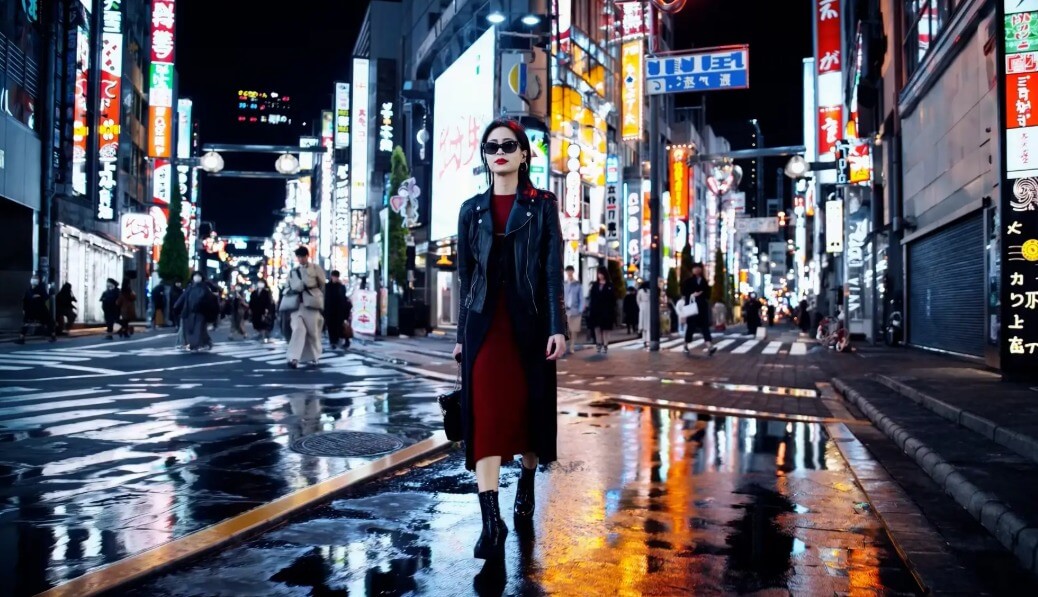
It is hard to tell if the video is real or AI generated due to the high quality of the videos, textures, dynamics of scenes, camera movements, and a good level of consistency.
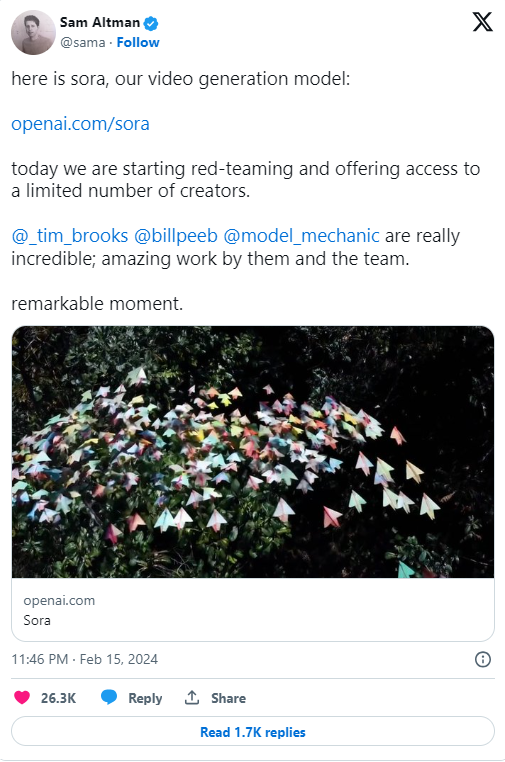
Sam Altam shared this news with a Twitter post about Sora.
Current Status of Sora AI (2026 Reality Check)
As of now, Sora AI is not publicly available. OpenAI has shared limited demonstrations and research insights while keeping access tightly controlled.
Several factors influence this cautious approach:
- Safety concerns: High-quality video generation raises risks related to misinformation and deepfakes.
- Ethical implications: The potential misuse of realistic AI-generated video requires careful safeguards.
- Technical limitations: Scaling text-to-video systems reliably remains challenging.
- Regulatory considerations: Governments and organizations are increasingly scrutinizing generative AI technologies.
Because of these factors, there is no confirmed timeline for a public release of Sora. Any future availability is likely to be gradual and carefully managed.
How Sora AI Works (Conceptual Overview)
At a high level, Sora AI works by translating text descriptions into visual scenes over time. Instead of generating a single image, Sora attempts to understand how objects, people, and environments should move and interact across multiple frames.
Key concepts behind Sora’s approach include:
- Text-to-scene understanding: Interpreting written prompts into visual elements such as objects, characters, lighting, and camera perspective.
- Temporal consistency: Maintaining continuity so that scenes do not visually “break” between frames.
- Motion modeling: Understanding how objects and characters move naturally within a scene.
- Longer sequence generation: Producing video clips that extend beyond a few seconds while remaining coherent.
This combination allows Sora to generate videos that feel more realistic and structured compared to earlier text-to-video experiments.

What Makes Sora Different From Earlier Text-to-Video Models
Before Sora, many text-to-video tools struggled with issues such as distorted motion, inconsistent visuals, and short, fragmented clips. Sora differs in several key ways:
- Improved scene coherence: Videos show better continuity across frames.
- More realistic motion: Movements appear smoother and closer to real-world physics.
- Complex prompt handling: Sora can interpret more detailed prompts involving multiple elements.
- Cinematic potential: Demonstrations suggest the ability to generate scenes with depth, perspective, and storytelling elements.
These differences do not mean Sora is flawless or production-ready, but they highlight how far text-to-video research has progressed.
Potential Use Cases for Sora AI (If and When Widely Available)
If text-to-video models like Sora become widely accessible, they could support a range of creative and practical applications, such as:
- Creative storytelling: Generating visual concepts for short films, animations, or narratives.
- Education and training: Visualizing complex ideas, historical events, or scientific processes.
- Concept prototyping: Helping media teams explore ideas before full production.
- Marketing visualization: Creating early-stage concepts for campaigns or product storytelling.
These use cases should be viewed as possibilities, not guarantees, as real-world adoption depends on access, quality, and regulation.
Limitations, Risks, and Ethical Considerations
Despite its impressive demonstrations, Sora AI also highlights serious challenges:
- Deepfake risk: Realistic AI video can be misused to spread false information.
- Copyright uncertainty: Training data and output ownership remain complex issues.
- Bias and representation: AI-generated visuals may reflect biases present in training data.
- Trust and authenticity: Distinguishing real footage from AI-generated content becomes harder.
These concerns explain why OpenAI and other organizations approach advanced video generation cautiously.

How to generate a Video from Text?
There is no confirmation on the launch date for Sora. But Simplified AI text to video generator can be a great option in the meantime.

The Simplified AI video generator transforms the content creation with its ability to transform a single long video into multiple AI-enhanced clips. Its user-friendly editor allows for easy subtitle addition and video adjustments, setting it apart with its extensive editing capabilities.
The AI Magic Resizer feature ensures your videos fit perfectly across all social media platforms. With more than 20 presets, including the popular Ken Burns and Stop Motion effects, Simplified makes professional video editing effortless and accessible. This tool is a boon for creators aiming to elevate their content with a professional touch, without getting bogged down in complex editing software.
It has an exceptional video quality paired with an intuitive, user-friendly interface that ensures high quality videos without compromising on the ease of use.
Comprehensive suite of features including editing options, animation enhancements, and multilingual translation capabilities, making it a versatile all-in-one video creation tool.
How Sora Fits Into the Future of AI Video
Even without public access, Sora plays an important role in shaping the future of AI video. It influences research directions, sets expectations for realism, and highlights the need for responsible deployment.
Sora’s development suggests that text-to-video generation will continue to evolve, potentially transforming how visual content is created, tested, and conceptualized — provided ethical and safety challenges are addressed responsibly.
FAQs
Q. What is Sora AI?
A. Sora AI is an experimental text-to-video model by OpenAI that generates short video clips from written prompts and is currently used for research purposes.
Q. Is Sora AI available to the public, and how can people get access?
A. Sora AI is in a limited, phased rollout. OpenAI has granted controlled access to select users and researchers, but there is no fully open public release at this time.
Q. Can creators or businesses use Sora AI today?
A. No. Sora AI is not broadly available for creators or businesses, and OpenAI has not announced an open signup or public API.
Q. When might Sora AI be released more broadly?
A. OpenAI has not shared a confirmed timeline. Any wider release is expected to depend on further testing, safety reviews, and regulatory considerations.
Conclusion
Sora marks an important step in the evolution of AI-generated video. Instead of signaling an immediate change in how creators make videos, it reflects ongoing research focused on making text-to-video systems more realistic, reliable, and responsible.
As OpenAI continues to test and refine Sora, the project offers insight into where AI video technology may be headed and highlights the need for safety, ethics, and thoughtful deployment.